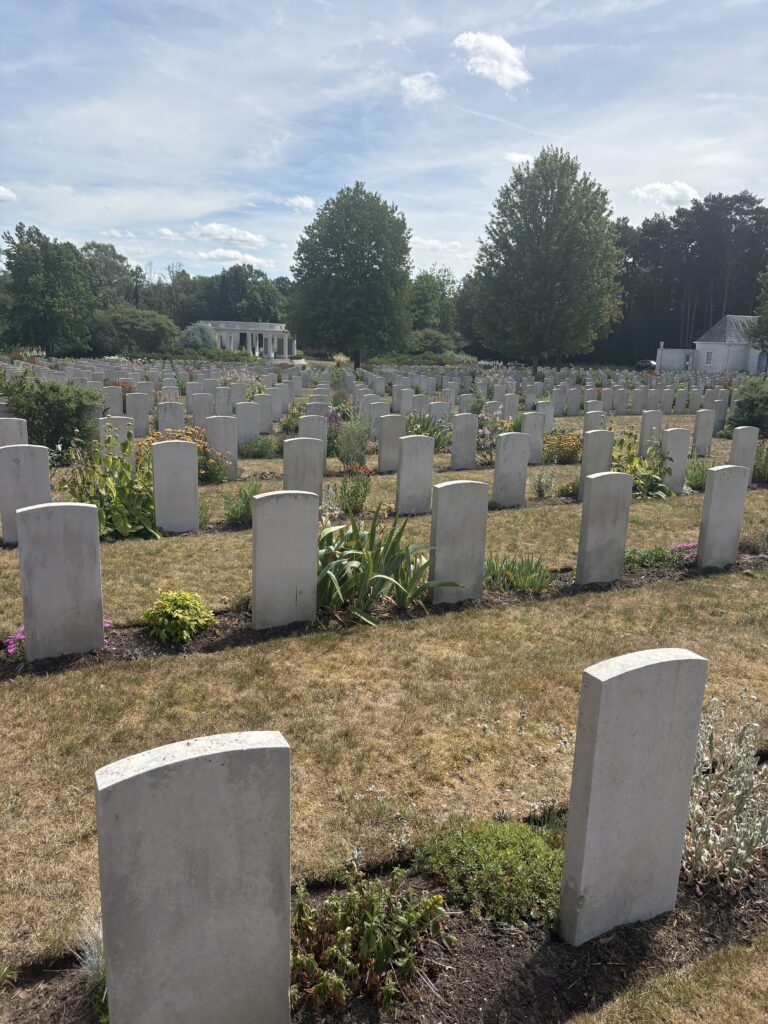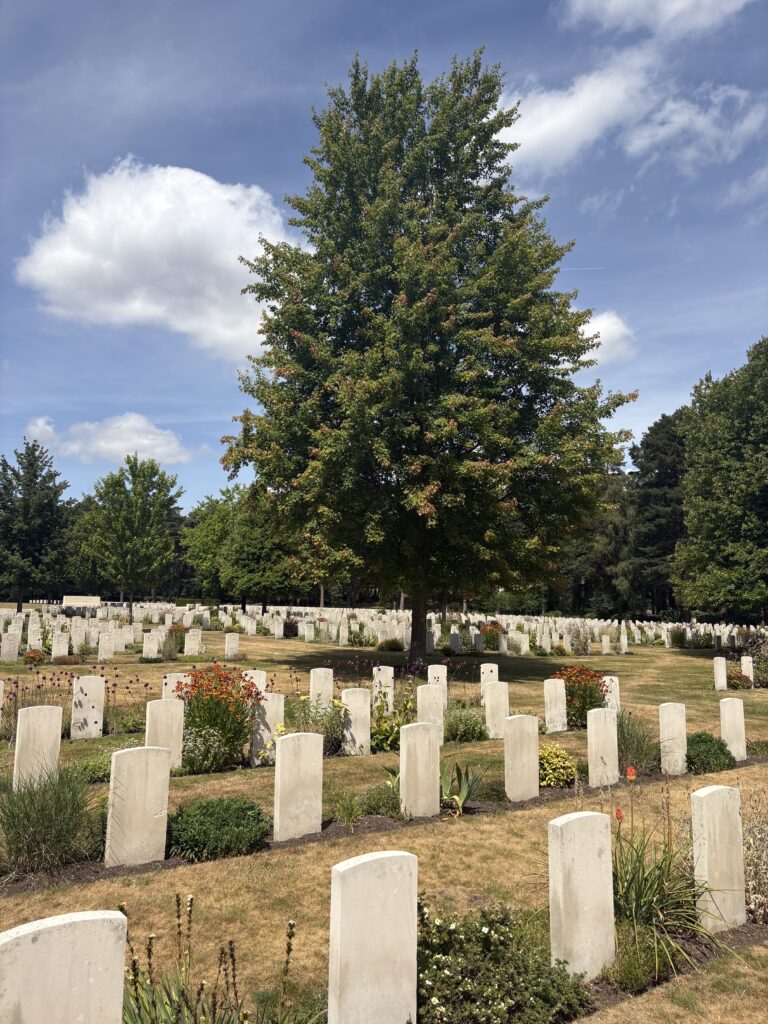
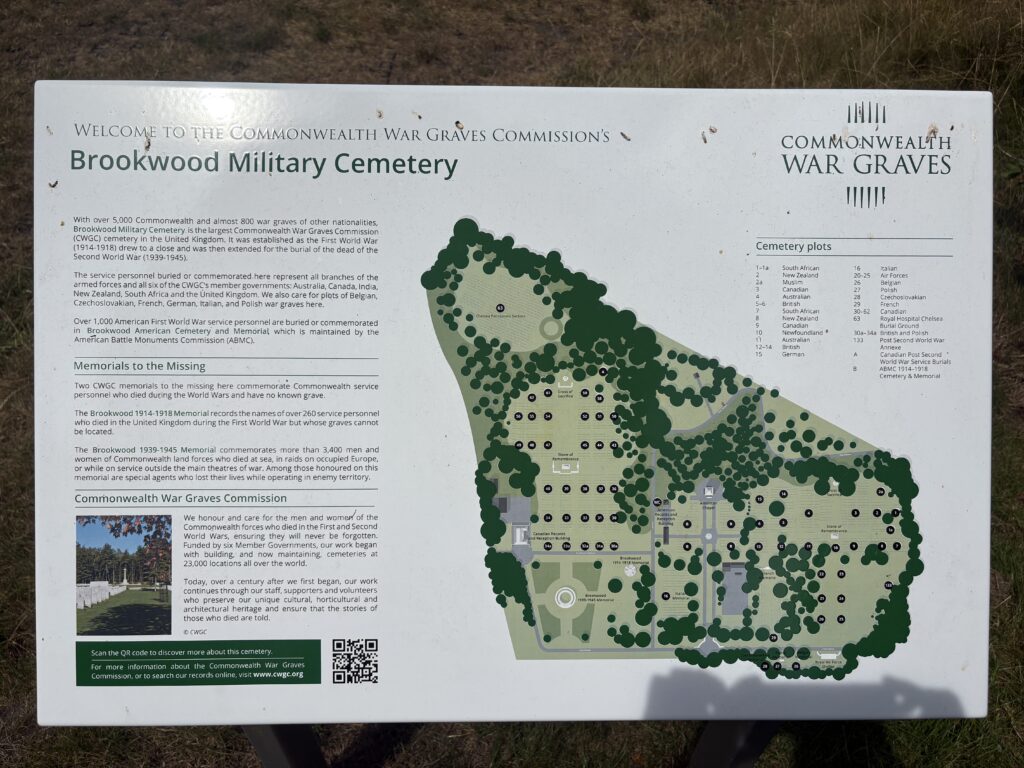
On Sunday 5 July I travelled to Brookwood Cemetery: the largest cemetery in the UK (220 acres of land, ~235,000 burials), containing the largest military cemetery in the UK (37 acres, 5627 burials). The military cemetery contains burials from several different nationalities: all cared for by the Commonwealth War Graves Commission (CWGC) except for the American plot, which is maintained by the American Battle Monuments Commission.
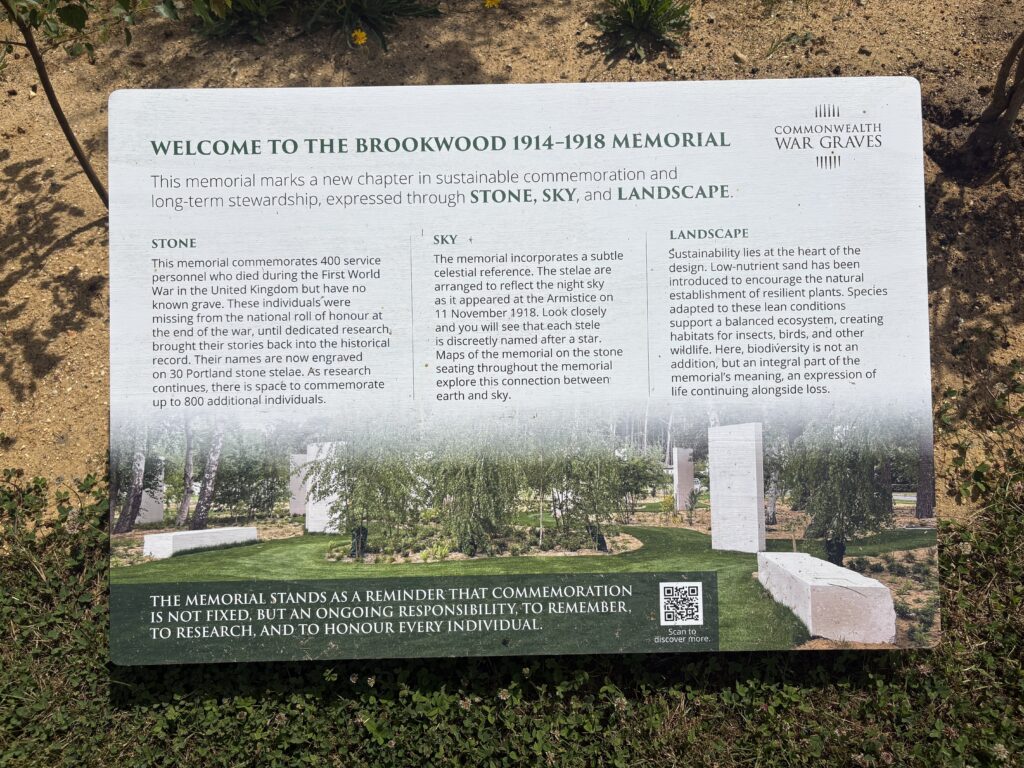
The military cemetery is also home to several memorials, including the new “Brookwood 1914-1918 memorial” unveiled this year; it commemorates First World War casualties who died in the UK (there are already extensive memorials to the missing on the Western Front and in other battlefront theatres of the war) but for whom no graves could be found.
The CWGC regularly offers volunteer-led tours of the military cemetery: general introductions, and sometimes ones with special themes. I spotted a specialised epitaphs-themed tour running on 5 July so decided to make the trip and see what I could learn! The guide was volunteer Mike D, who did a fantastic job and clearly had extensive knowledge about the site and its graves. Below I’ve highlighted a few of the epitaph examples I found the most thought-provoking, followed by my key takeaways in terms of how the tour was structured and delivered.
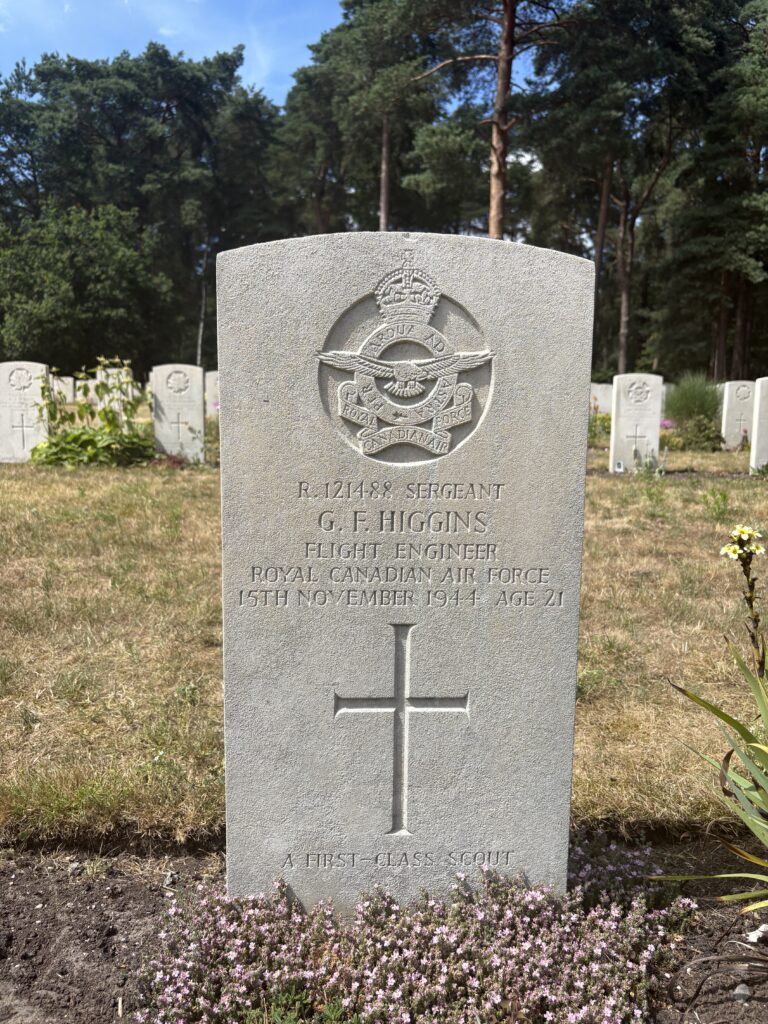
First up is Gerald Frederick Higgins. He – like the majority of the examples on the tour, unbeknownst to me beforehand! – was Canadian, like me. His epitaph, “A first-class scout”, highlights the skills and training he received as a member of the Scouts movement (the now 30-million-strong organisation for young people founded by Lord Baden-Powell in 1908). This illustrates one of many potential uses of epitaphs: to provide insight into the deceased’s interests/activities/skills.
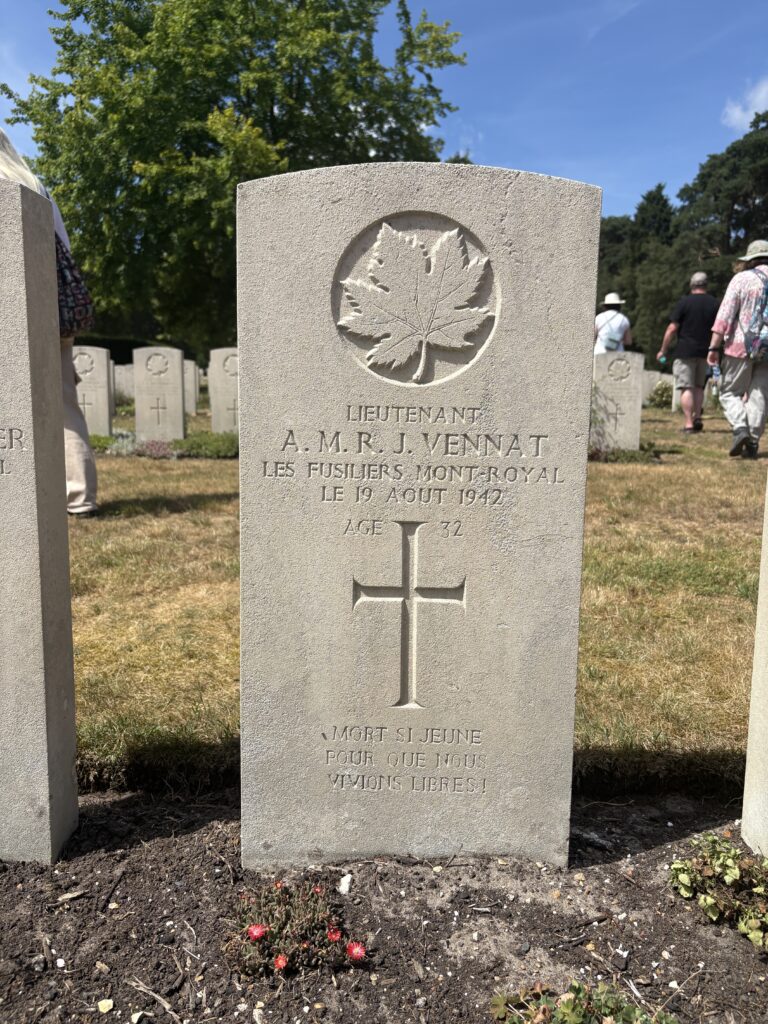
Andre Vennat‘s headstone, below, has an inscription in French, as he was a Francophone Canadian: “Mort si jeune pour que nous vivons libres!” (Approximately, “Died so young so that we might live free!”). Our guide pointed out that French-speaking Canadians were incredibly valuable to the British imperial forces in both World Wars, for being able to fluently operate in France, one of the main theatres of each war.
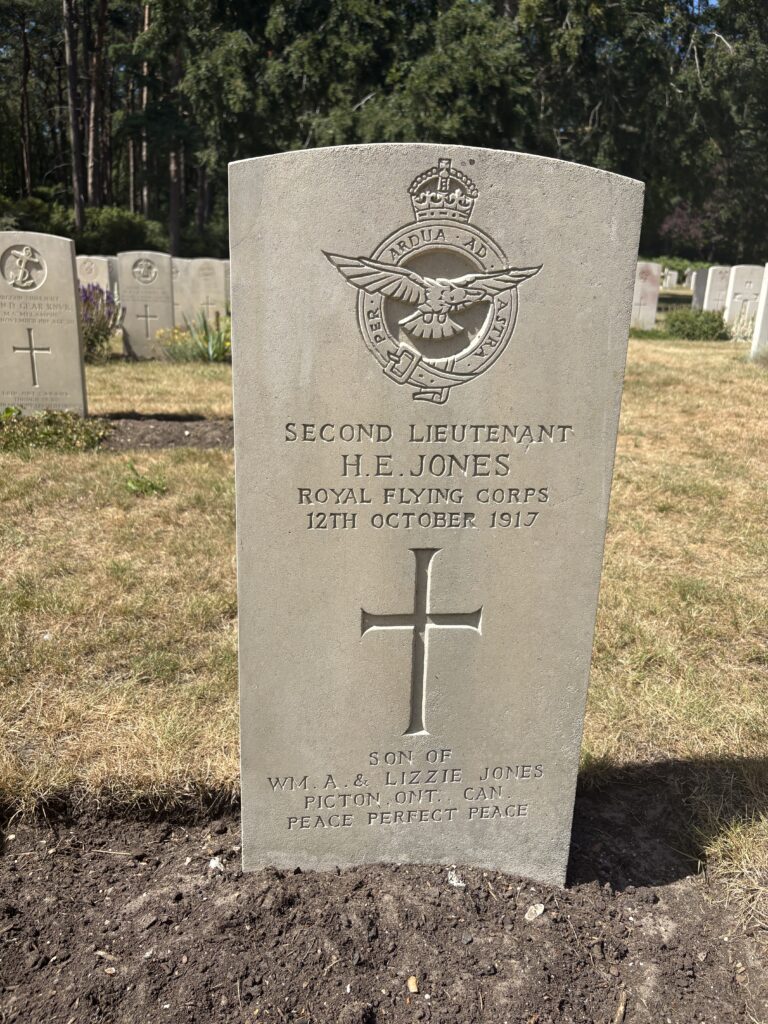
Our guide used the below example, of Harry Edward Jones, to illustrate how families could use epitaphs to highlight their origins: with his including the line “Picton, Ont [Ontario], Can [Canada]” –
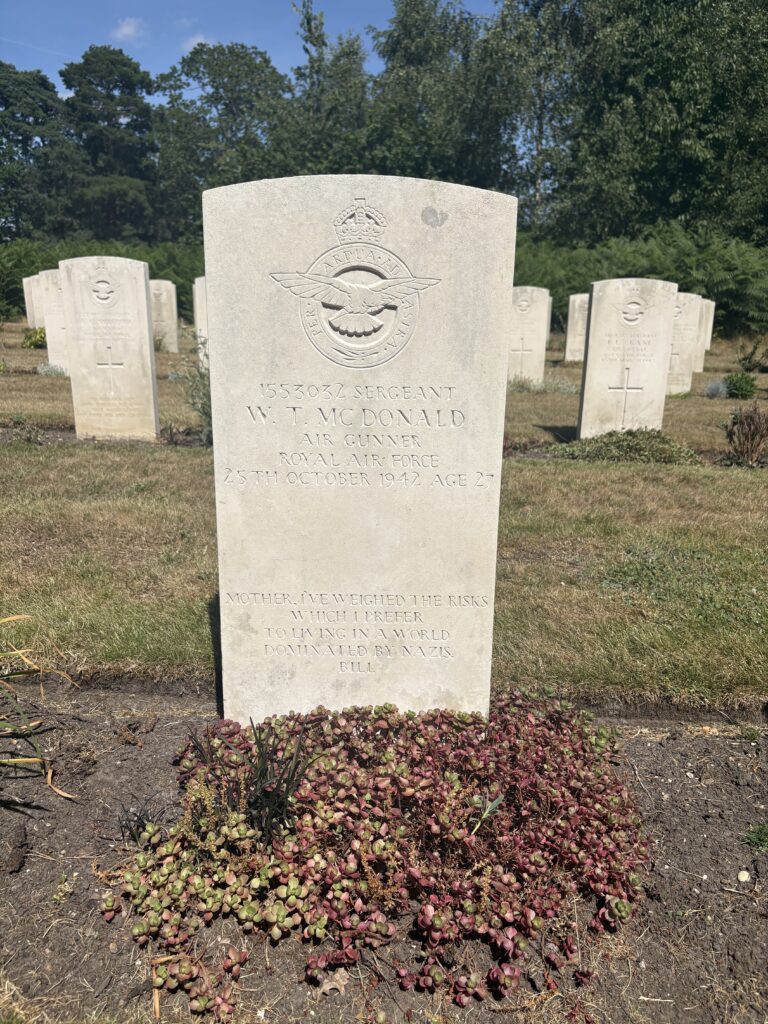
Epitaphs are chosen by next of kin, so it is usually their voices we hear in epitaph inscriptions, not the deceased. However, William Thomas McDonald‘s parents (Brits living in Chile) chose an excerpt from one of his letters as his epitaph, so we get the rare opportunity to hear from him directly: “Mother, I’ve weighed the risks / which I prefer to living in a world dominated by Nazis / Bill”. This epitaph also breaks the usual “maximum 66 characters / 4 lines” CWGC rules for epitaphs. The headstone is notable too for the absence of the standard cross symbol, which implies that his parents specifically requested its omission.
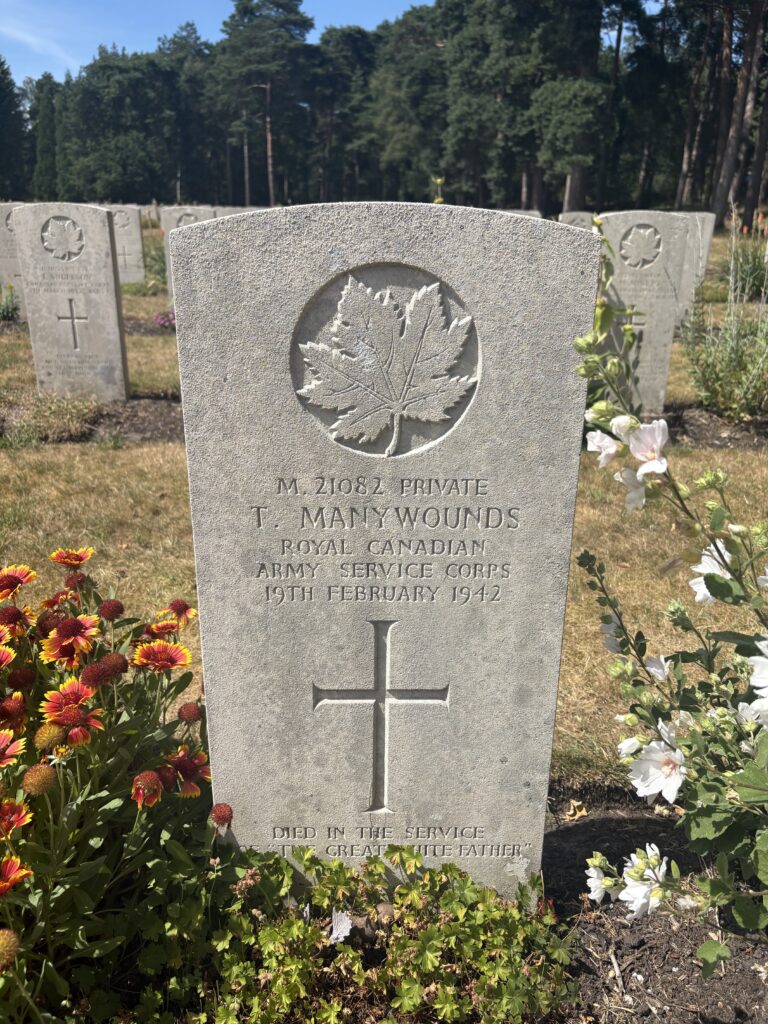
Proposed epitaphs were screened by the CWGC for overly negative or inappropriate sentiments, so it is somewhat surprising that Teddy Manywounds‘ epitaph (below) was approved: “Died in the service of the ‘Great White Father'”. Who is that referring to: the British King, or God?
Manywounds was Indigenous (First Nations), one of at least 4250 First Nations men and women in Canada to enlist. First Nations people were heavily discriminated against at the time, both in society at large and in the military specifically. For example, “Both the Royal Canadian Air Force (RCAF) and Royal Canadian Navy (RCN) required volunteers be “of pure European descent and of the white race,” until 1942 and 1943 respectively.… inadequate healthcare and schooling for Indigenous populations in the early 20th century [also] meant few could meet strict medical and demanding education standards.” Despite fighting and sometimes dying for “Canada”, Canadian First Nations people did not have the right to vote without conditions until 1960.
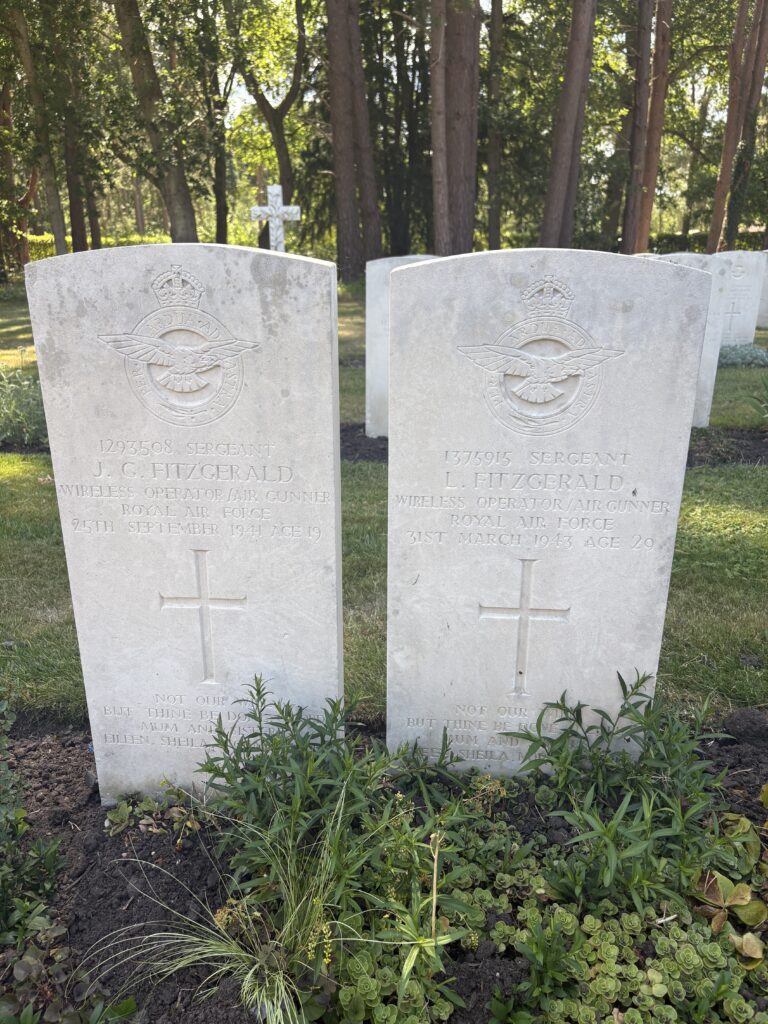
(Below) Brothers Joseph Gerald Fitzgerald and Leslie Fitzgerald are, unusually, buried together in a joint grave. They have identical epitaphs: “Not our will but thine be done, O Lord. Mum and sisters Eileen, Sheila, Norah, Molly”.
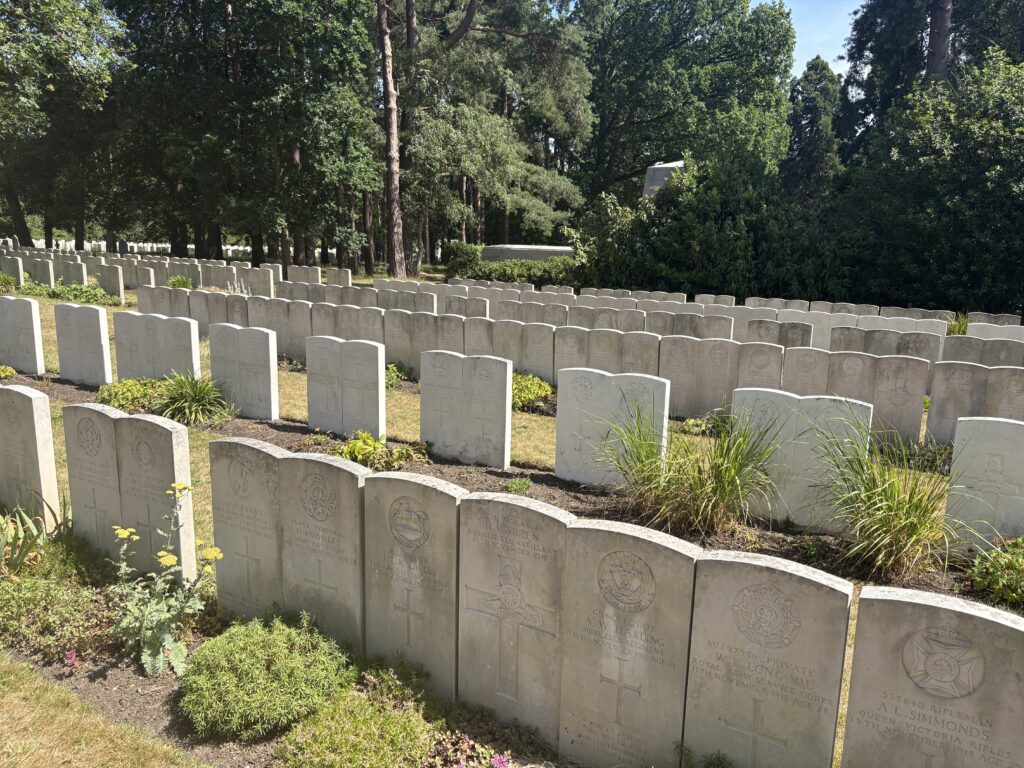
Compared to the orderly spacing of the Second World War plot, seen in several of the above photos, the First World War plot (below) is noticeably different, with headstones spaced much closer together. This indicates the more ad hoc nature of the burials and also the proliferation of joint graves.
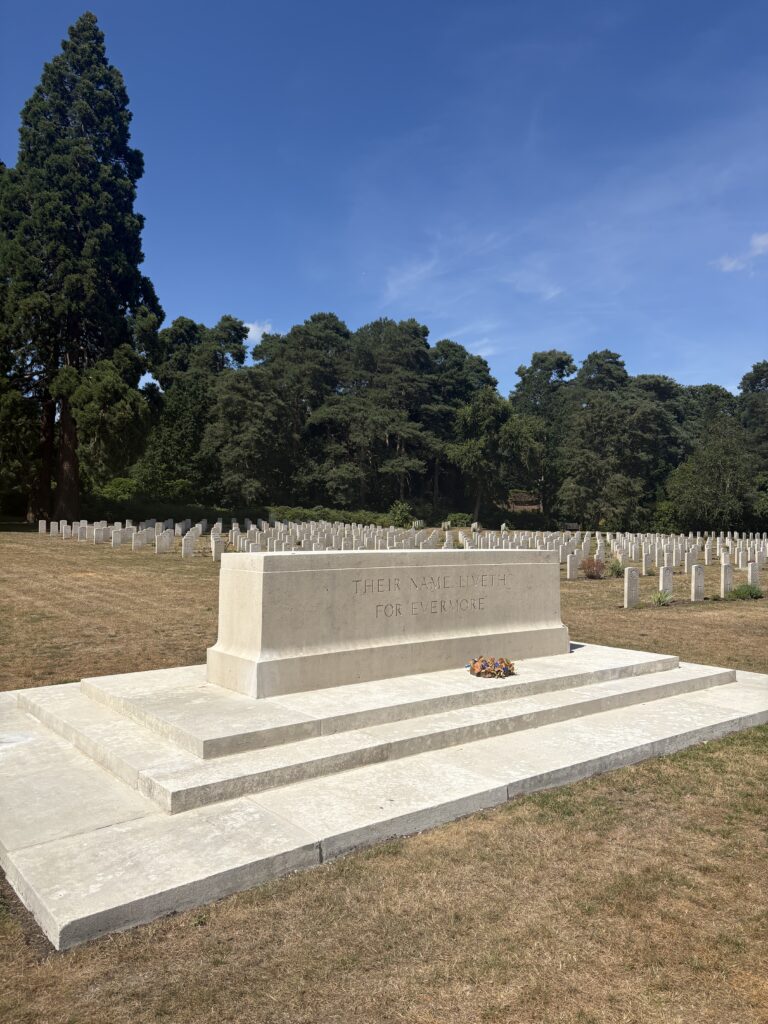
As this cemetery has more than 1000 CWGC burials, it features a Stone of Remembrance (below). (Read more about its design)
The cemetery also features the Cross of Sacrifice (read more about its symbolism here), seen in the background of the below photo.
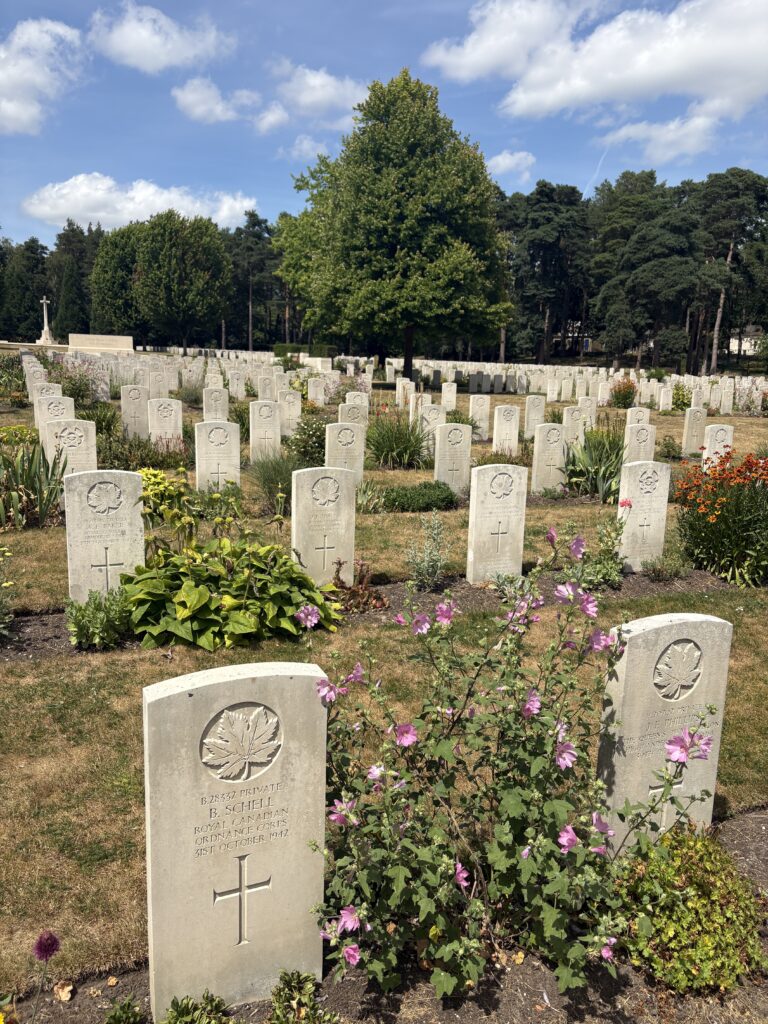
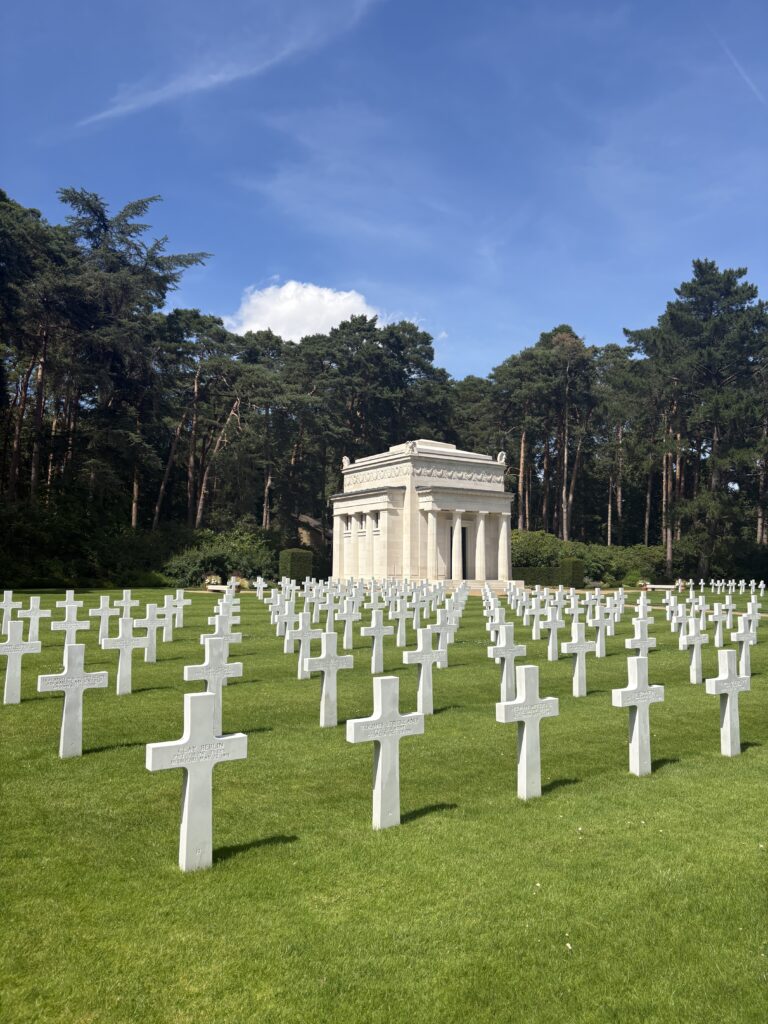
We walked past the American military cemetery (below), with our guide pointing out the difference in how much information can be fitted onto the much smaller available surface area of a cross headstone, compared to the rounded slab surface of CWGC headstones. The engraved words have Normandy sand (D-Day beaches) rubbed into them periodically by caretakers, which helps the words remain legible.
Some of my key takeaway thoughts:
- Because of the non-repatriation policy for bodies of the British imperial dead in both World Wars, burials in Brookwood (and throughout UK CWGC sites) fall into three main categories of causes of death: illness, accidents, and death in hospital from battle wounds. Does the cause of death impact epitaph selection, especially re: concepts of what counted as ‘good’ or ‘valiant’ or ‘honourable’ deaths? (ie it was perhaps easier to think of death as a “duty bravely [or nobly] done”, to quote a common CWGC epitaph, for battlefield deaths versus training accidents on British soil).
- Giving overall context is crucial: Mike the guide started with some brief “how to read a CWGC headstone” info, and explanations about epitaph logistics: including, notably, that they originally cost money per letter. This caused earlier British First World War epitaphs to often be as short as possible (money-saving for the family), e.g. just “RIP” rather than longer, more interesting/detailed epitaphs. It also caused the Canadian government to decide to cover the cost for all Canadian CWGC epitaphs (causing a much higher proportion of Canadian CWGC graves to have epitaphs) and the New Zealand government to decide that since disparity would be unfair, no New Zealand CWGC graves could have epitaphs.
- Unlike most civilian cemeteries, CWGC cemeteries are very well mapped and ordered, making wayfinding possible: including having row numbers on the sides of headstones at the ends of rows. Mike the guide made the tour more interactive by asking attendees to navigate to the next headstone on the itinerary.
- For epitaph tours, it’s effective (as this one did) to highlight the wide variety of motives and characteristics that epitaphs can evince.
Many thanks to Mike and the CWGC for this (free admission for all) tour!