On 12 June I attended a tour of Highgate Cemetery (West) in London – along with Becca Rhydderch-Price, the PhD student funded by the ShaxEpitaphs project. My goal was mainly to learn from the tour as a good-practice example of cemetery public engagement; plus, if possible, to photograph any ShaxEpitaph examples in the cemetery.
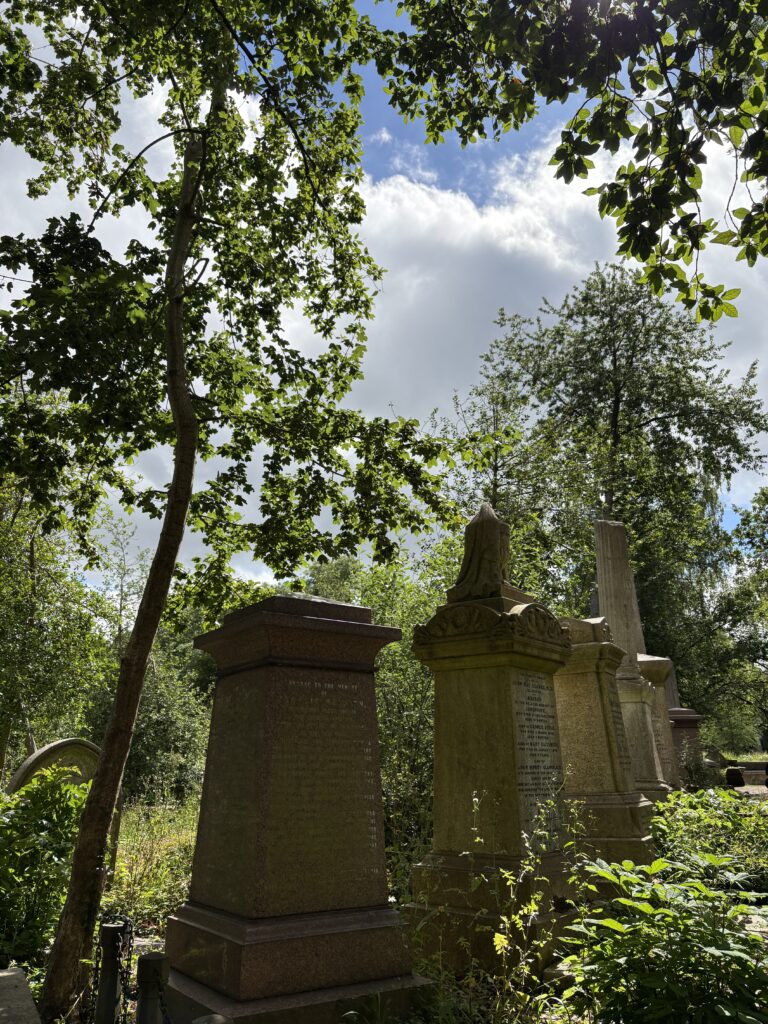
Highgate Cemetery is one of London’s famous “Magnificent Seven” cemeteries – opened in the 1800s to address overcrowding and sanitation issues in London’s existing, more centralised, burial grounds. Highgate is comprised of West (opened 1839) and East (opened 1860) halves (separated by a road), of 17 and 19 acres, respectively. It houses approximately 180,000 burials and is still actively in use.
The West half is only accessible via guided tour. Our guide Alison was fantastic, covering the stories and burial sites of nearly forty individuals during our 90-minute tour. (Including one ten-person mass grave). She told us that although all the guides have to follow a general prescribed route, the selection and research of the individual stories is at the discretion of the individual guide, so no two guides give the same tour.
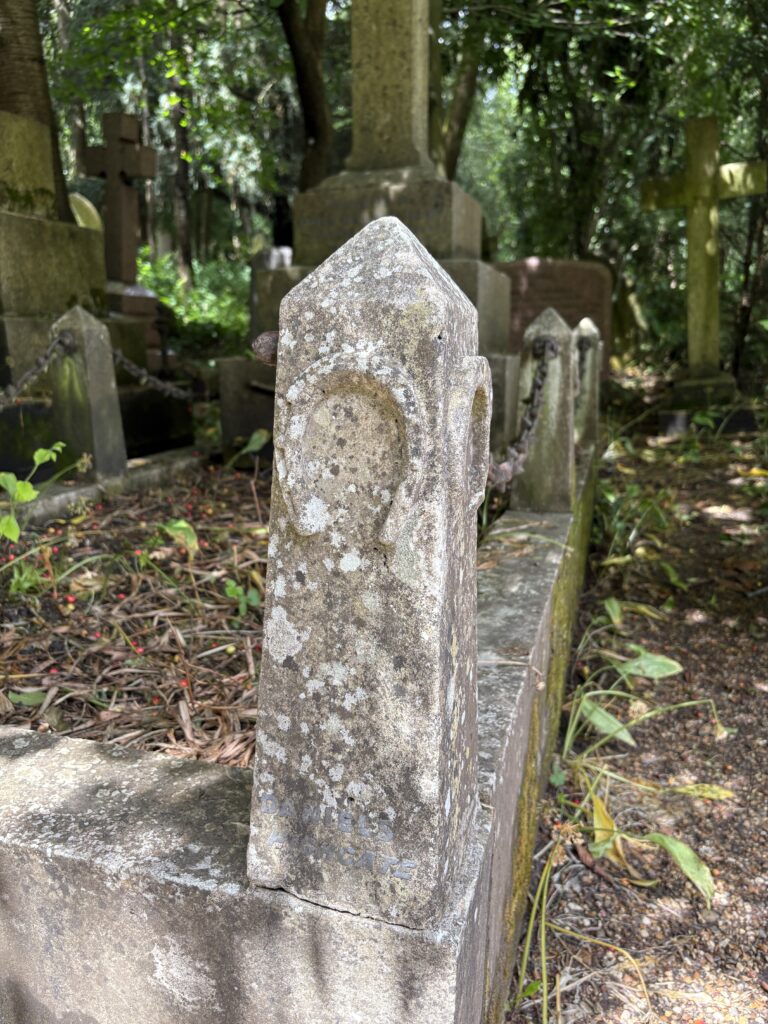
Our guide pointed out, at the very first grave we stopped at, that these horse-shoe symbols (above) are upside down, with the inversion symbolising death. Becca then wondered whether we’d see any other examples – we proceeded to see several other inverted symbols throughout the rest of the tour:
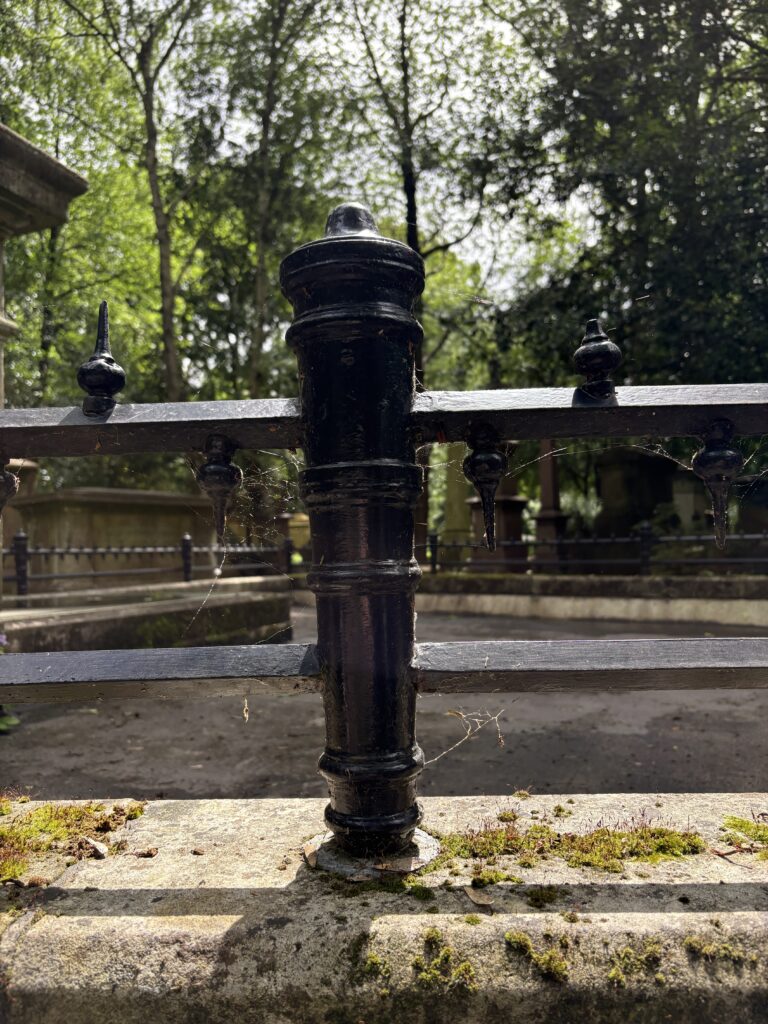
inverted cannons in the railing of a grave…
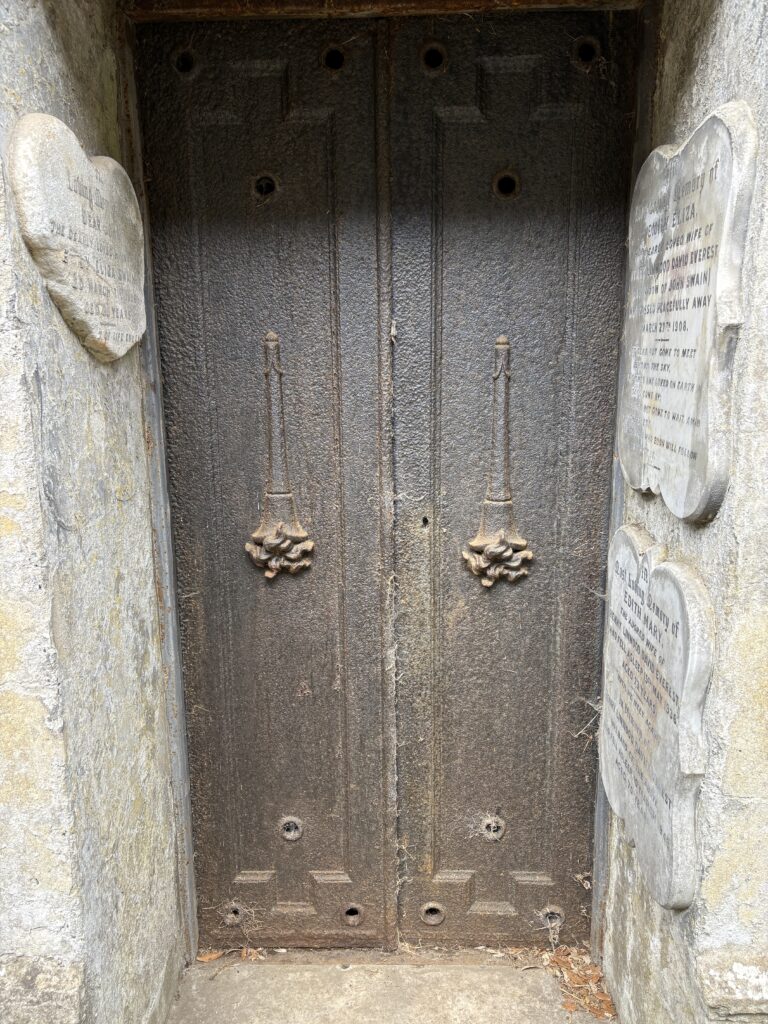
…and inverted torches on crypt doors. (Note also the inverted keyholes in the doors!)
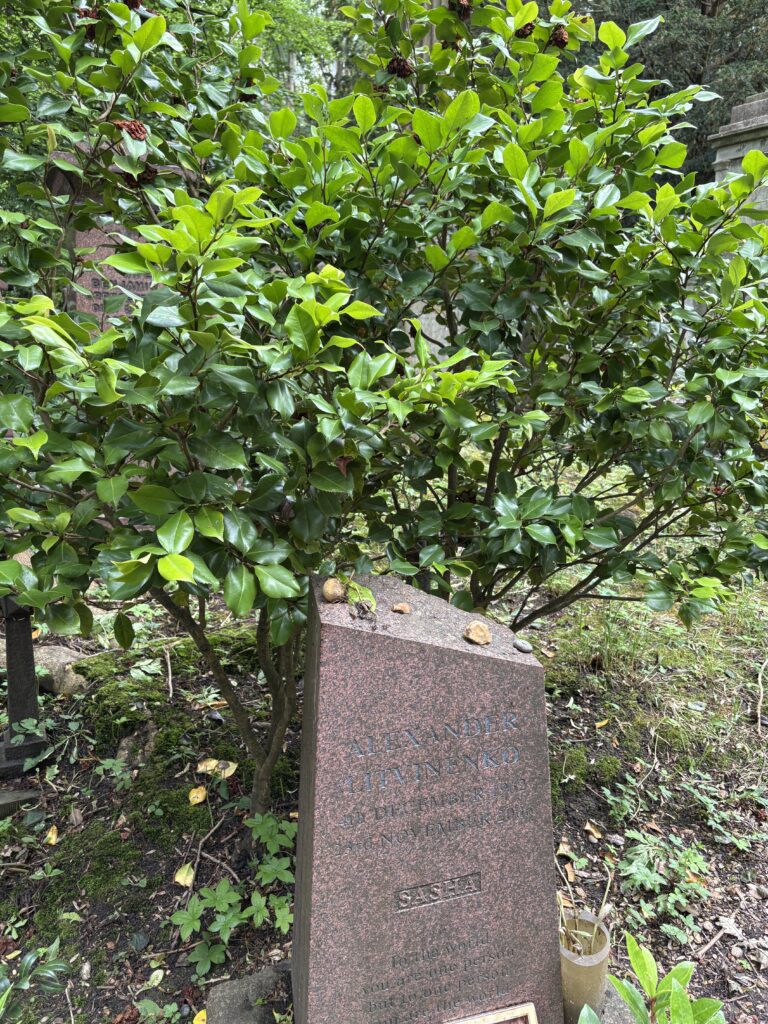
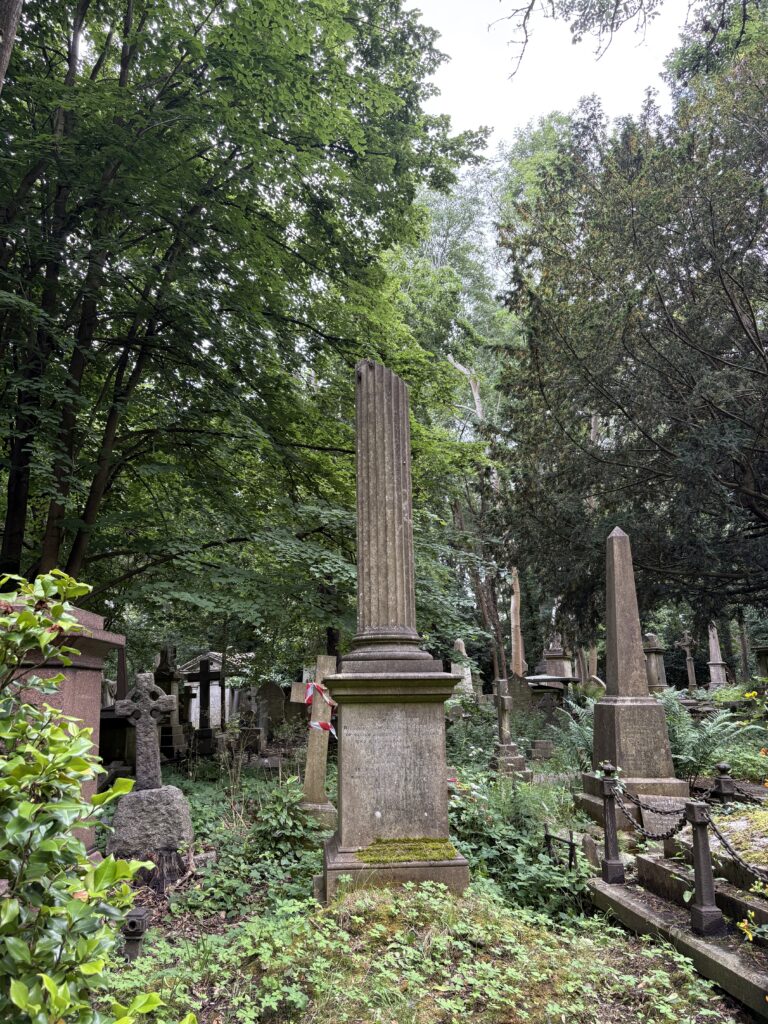
We also saw several examples of ‘broken’ architecture to indicate a life interrupted by death; broken columns (above and below)….
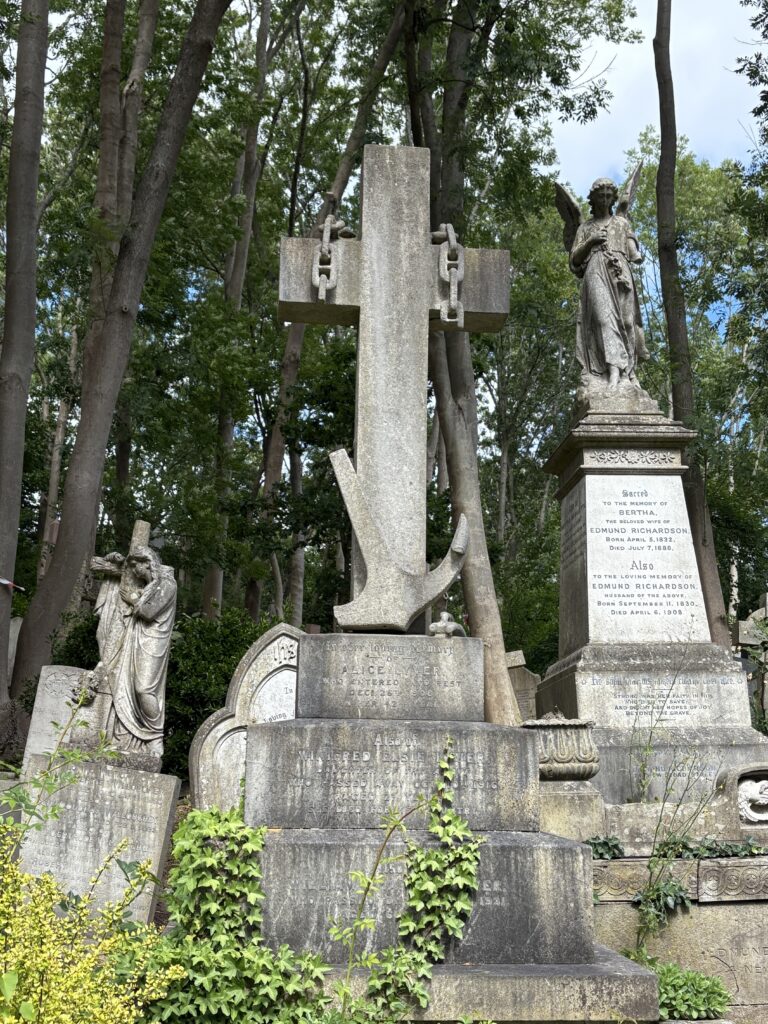
…. and a broken chain and anchor:
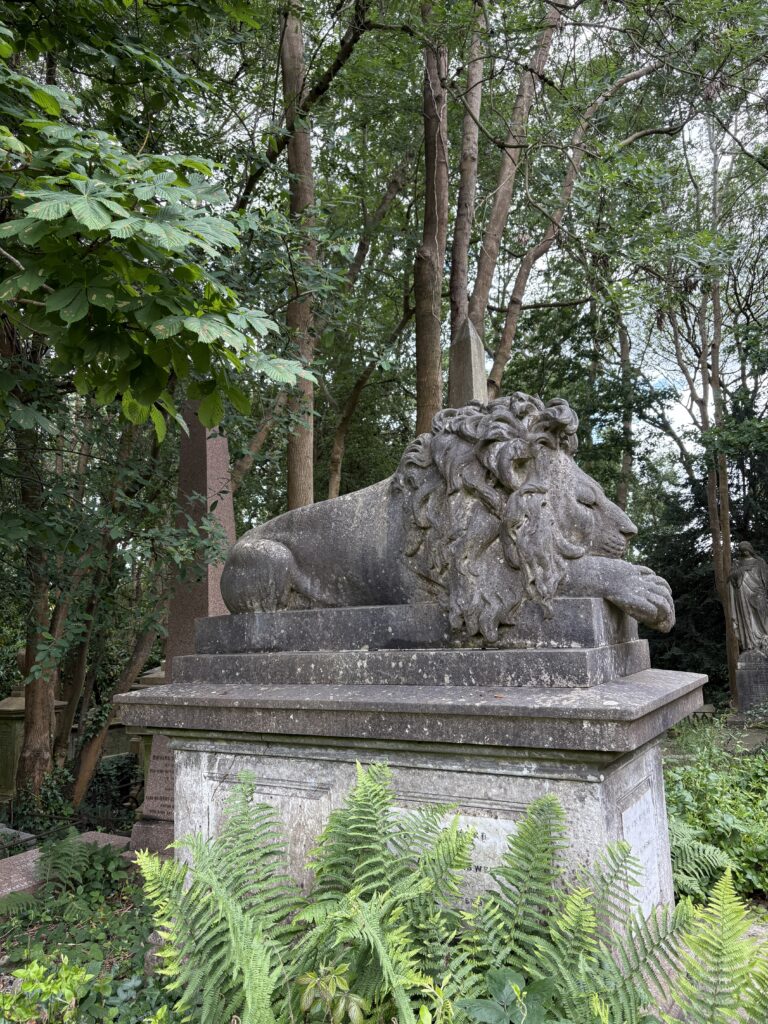
Some of the individual stories we learned particularly stuck with me. George Wombwell‘s tomb (below), has a large lion on it; he ran a (very unethical) menagerie, and was the first person to breed lions in captivity in Britain. On one occasion he helped Queen Victoria’s husband, Prince Albert, solve the mystery of what was killing Albert’s dogs (bad water), and in return Albert offered him a gift. Wombwell chose to request timber from the recently salvaged Royal George shipwreck (Becca’s research has a link to this, as one of her sources is a political cartoon involving both the shipwreck and Shakespeare references). Wombwell used the timber to make a coffin for himself, which he exhibited to the public for a fee while he was still alive.
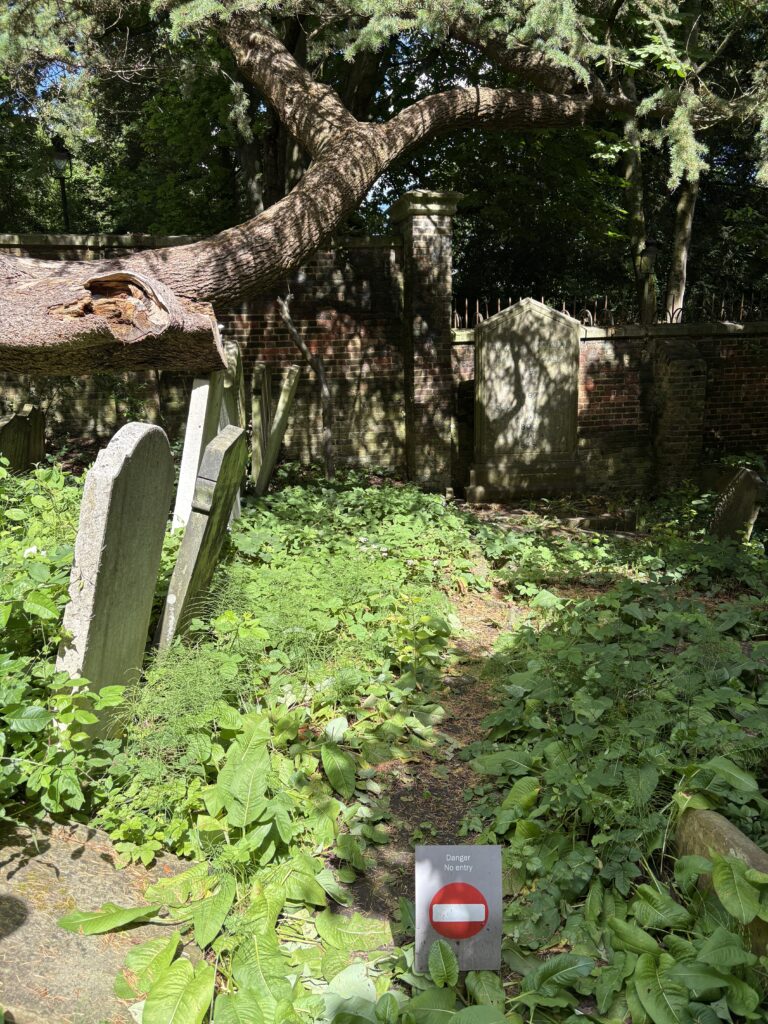
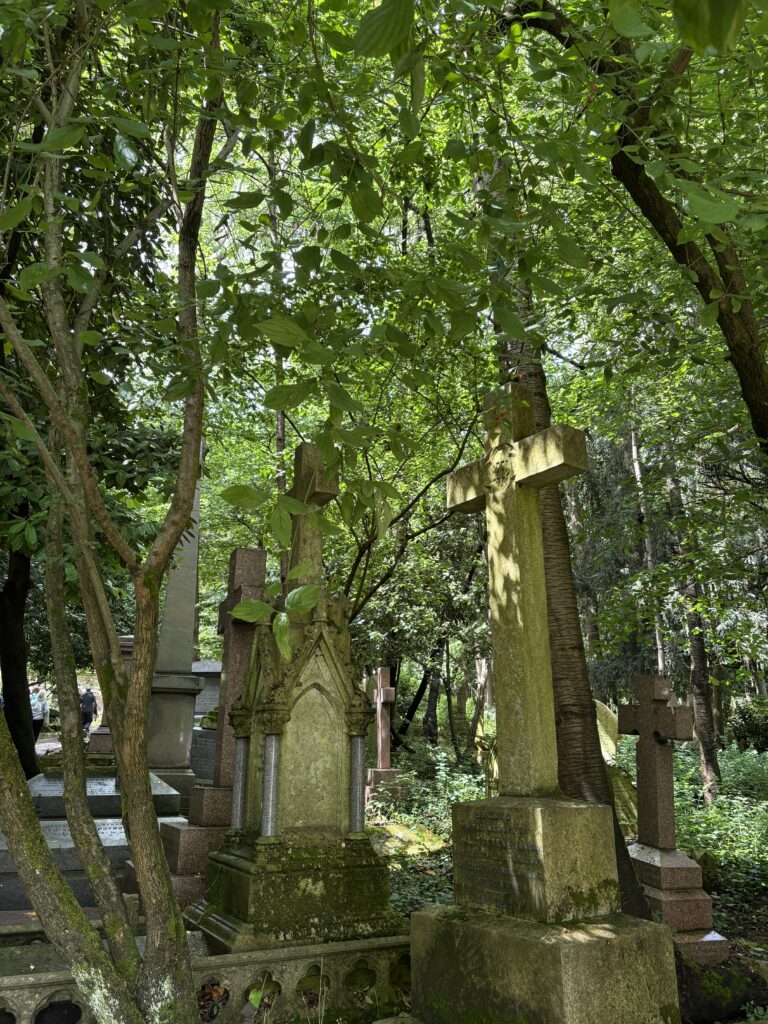
The large headstone against the wall in the below photo belongs to scientist Michael Faraday. Also of note is the foreground, where you can see a tree branch pressing on a slanting headstone – an illustrative example of the complex ongoing maintenance required to facilitate the relationship between the commemorative and horticultural functions of the site.
The white headstone in the background below denotes the oldest burial onsite:
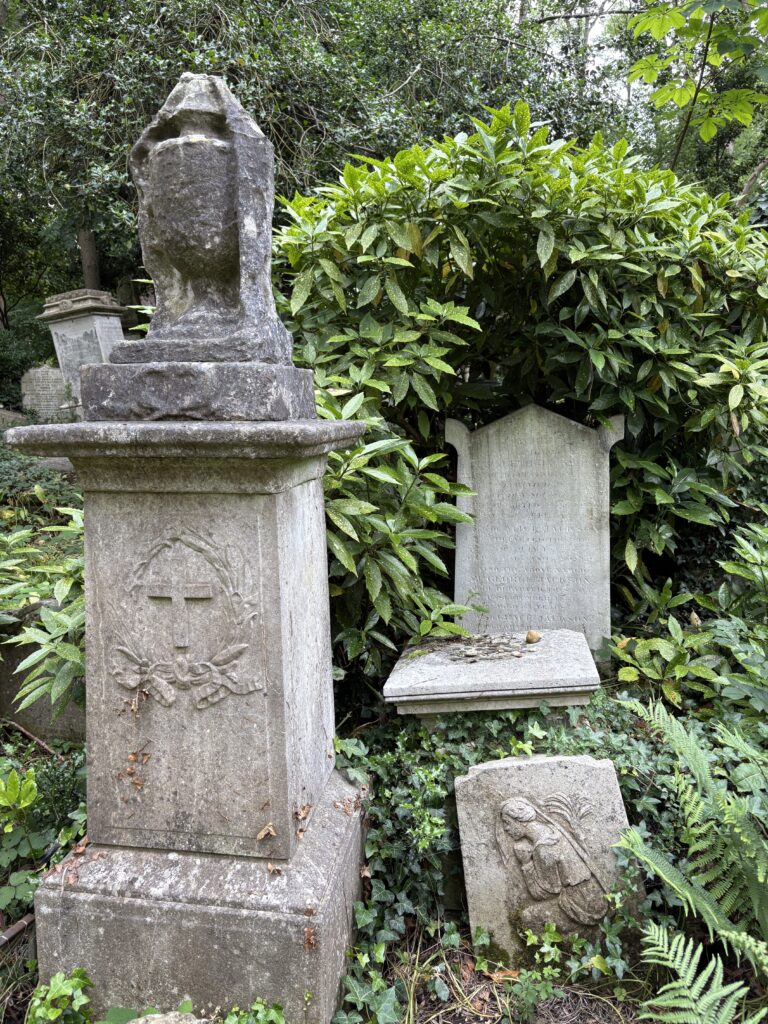
and the middle headstone in the row below was noted by our guide as an example, now less common, of the practice of headstones noting a cause of death. In this case, a young woman died in 1845, age 19, of her injuries after her dress had caught fire ten days before.
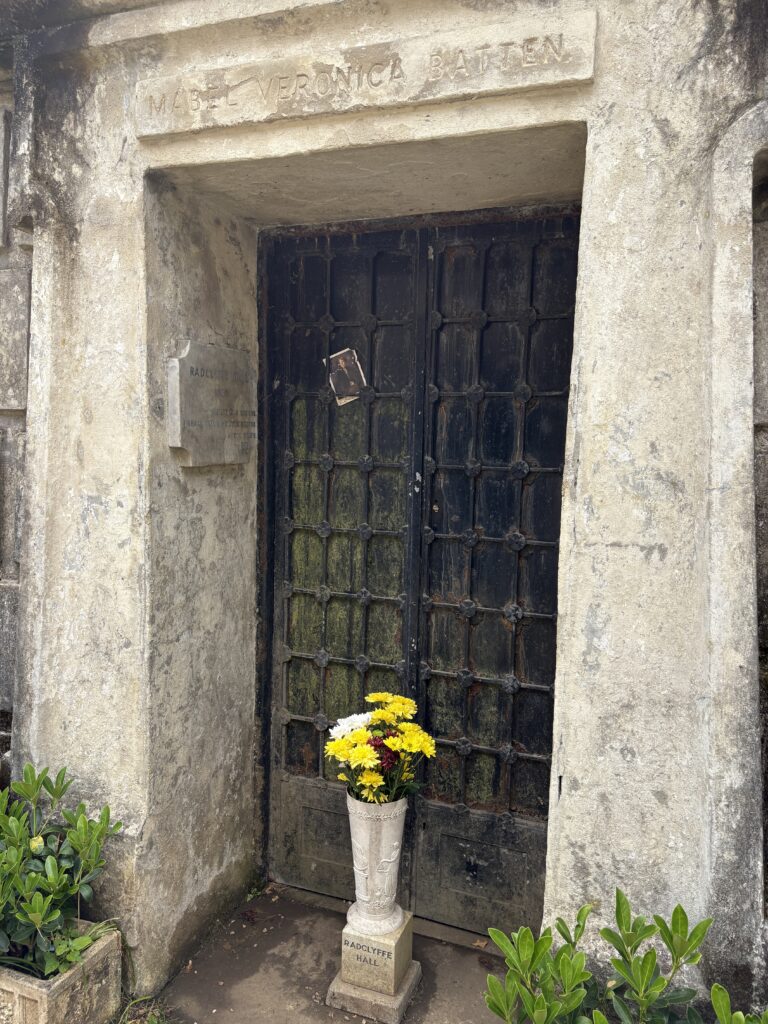
Radclyffe Hall, most famous for her 1928 lesbian novel The Well of Loneliness, is buried here with her first long-term partner, Mabel Batten (whose name you can see in stone across the top of the vault) –
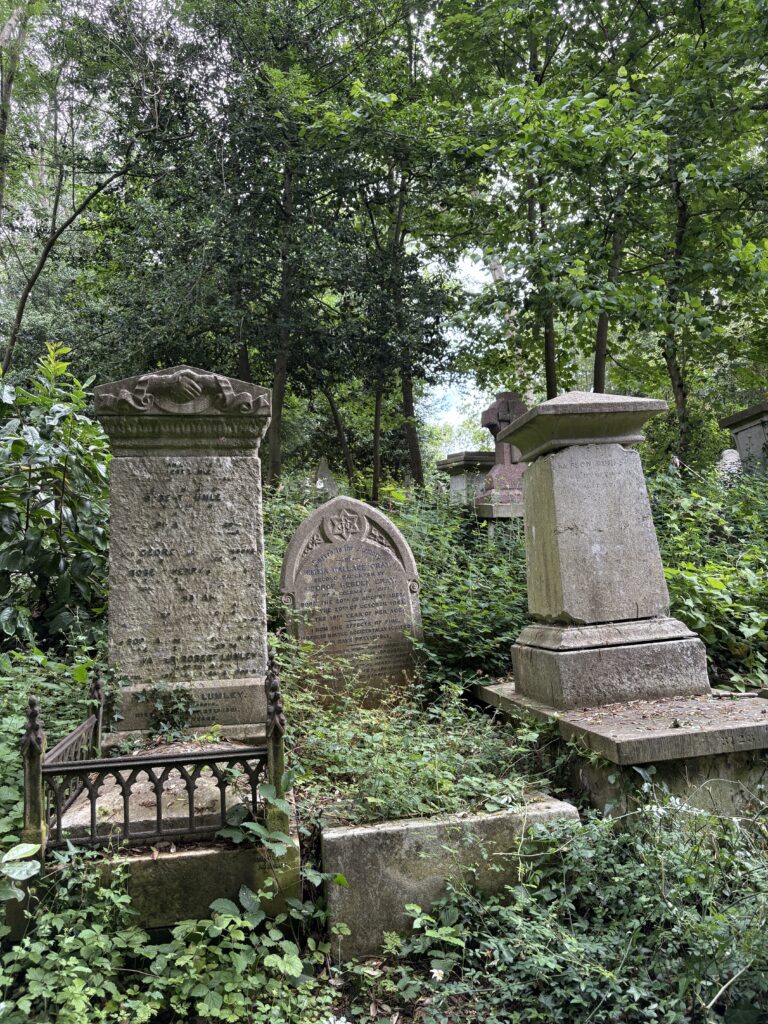
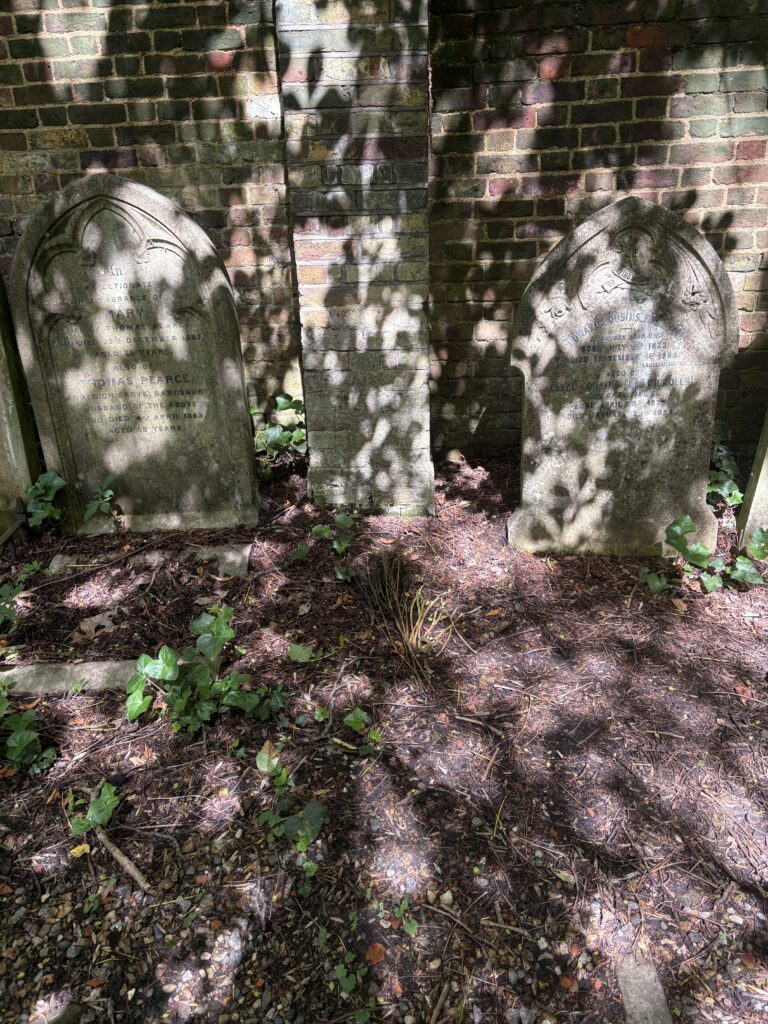
Below is the unmarked grave – in front of the pillar, between the two headstones – of the ten “Lost Girls of Highgate” (sex workers). A recent play, performed in 2025-2026 onsite at Highgate, aims to tell their story: “Ten “fallen women”, the youngest only fourteen years old, lay nameless and forgotten in an unmarked grave in Highgate Cemetery’s West side for over a century. That is, until relatively recently. Drawing on research, contemporaneous accounts and imagination, we tell the stories of these “Lost Girls”. What was daily life like in “The House of Mercy”, Highgate’s strict penitentiary for fallen women? Christina Rossetti served as a volunteer at the House: could these girls’ stories have been the inspiration for some of her poetry? Were they prostitutes, sinners and hopeless cases, or were they ordinary girls, with teenage hopes and dreams, before hardship befell them? What led them to an ignominious end in a largely forgotten plot of the cemetery? This play reveals compelling lives, tragically cut short by poverty and illness. The girls may be lost to time, but they will now be honoured and not forgotten.”
The ShaxEpitaphs team are aware of at least seven Shakespearean epitaphs in Highgate:
- “Alas! Poor Yorick!” (Hamlet Act 5 Scene 1 Lines 190-191) – John Burns Corrie, died 1848 age 40
- “‘The dearest friend, | The kindest man, | The best-conditioned | And unwearied spirit | In doing courtesies.’ Shakspeare.” (The Merchant of Venice Act 3 Scene 2 Lines 304-306) – John Ogden, died 1853 age 63
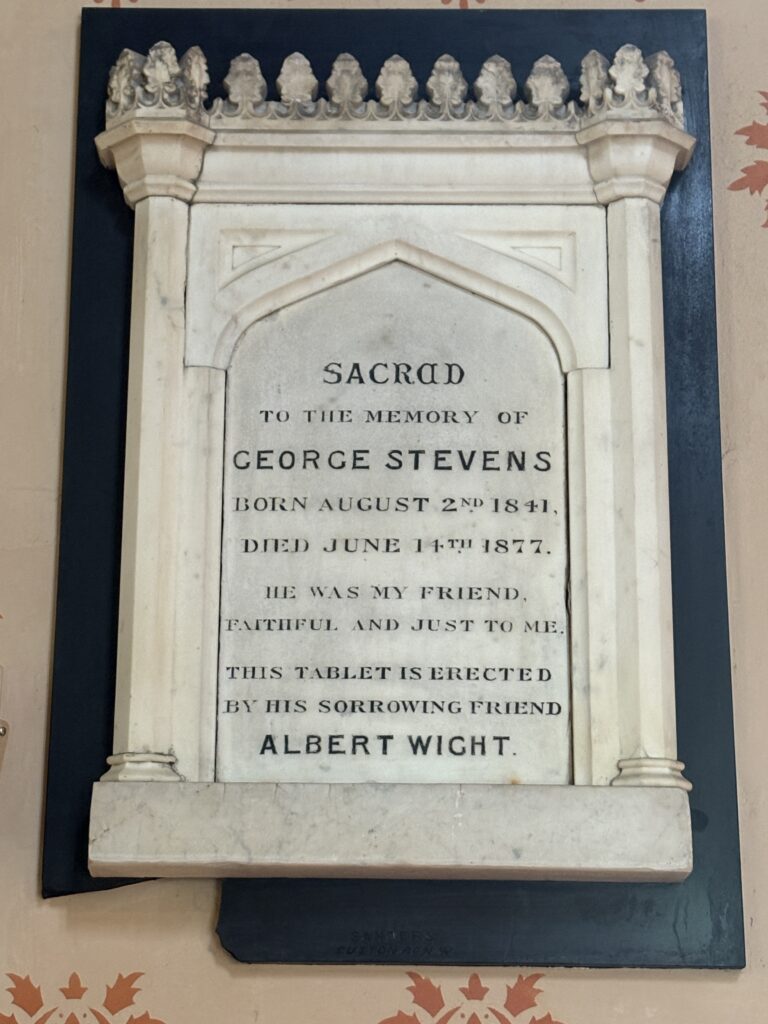
- “He was my friend, faithful and just to me” (Julius Caesar Act 3 Scene 2 Line 94) – George Stevens, died 1877 age 35
- “His life was gentle and the elements so mix’d in him, that nature might stand up and say to all the world… this was a man. Shakespeare” (Julius Caesar Act 5 Scene 5 Lines 79-81) – James Valentine Halford, died 1893 age 70
- “O, two such silver currents, when they join | do glorify the banks that bound them in” (King John Act 2 Scene 1 Lines 459-460) – Lucy Clifford, died 1929 age 82
- “He was not of an age but for all time” (description of Shakespeare by Ben Johnson) – [name redacted*], died 1998 age 68
- “Good night unto you all” (A Midsummer Night’s Dream Act 5 Scene 1 Line 453) – Ian Holm, died 2020 age 88
*n.b. We anonymise ShaxEpitaphs examples involving post-1960 deaths, except in the case of public figures (Ian Holm is a famous actor)
Unfortunately, only one of the examples was a) publicly accessible and b) findable by Becca and I. Several of the examples are located in Highgate Cemetery West, which is only accessible via a guided tour (so we couldn’t stray from the group to go look!). Others, albeit in the self-guided East section, we do not have specific location data and/or wayfinding data for. Lucy Clifford’s grave is described in our source as “near Karl Marx”, so Becca and I scrupulously checked all of the immediately neighbouring sections to Marx’s grave but unfortunately still could not find it. (“Near” may be a relative term across a 19-acre site…)
However, George Stephens we did find – in one of the chapels on site:
Some key takeaways for me in terms of the tour itself were:
- Short stops – I often get antsy and physically uncomfortable standing still for prolonged periods on guided tours, so I was surprised and appreciative that this tour only stayed ~2-3 minutes at each stop. This necessarily curtailed the depth of information provided on each individual, but the walk between stops allowed people time to ask the guide additional questions, and she also kindly stayed available at the end of the tour for anyone to approach with further questions.
- Demographic variety – examples varied in age, gender, profession, recent-ness of death, cause of death, and fame.
- Good use of individual stories as anchors to discuss broader societal themes / issues from their times: e.g. LGBTQ+ history, changing burial practices, women’s rights, etc.
- Overall length: 90 minutes seemed appropriate. Any less wouldn’t do justice to the vastness of the site, but any longer would have been difficult to hold attendees’ attention for.
- Emphasis on the ongoing life of the site; it’s not just a historic site, it’s a working cemetery with burial still happening and mourners still visiting. The guide explained how plots are purchased, upkept, and recycled; explained behaviour codes designed to keep the site respectful for visiting mourners; and explained the massive conservation and restoration project that the cemetery recently received funding for to ensure the continued safe use of the site.
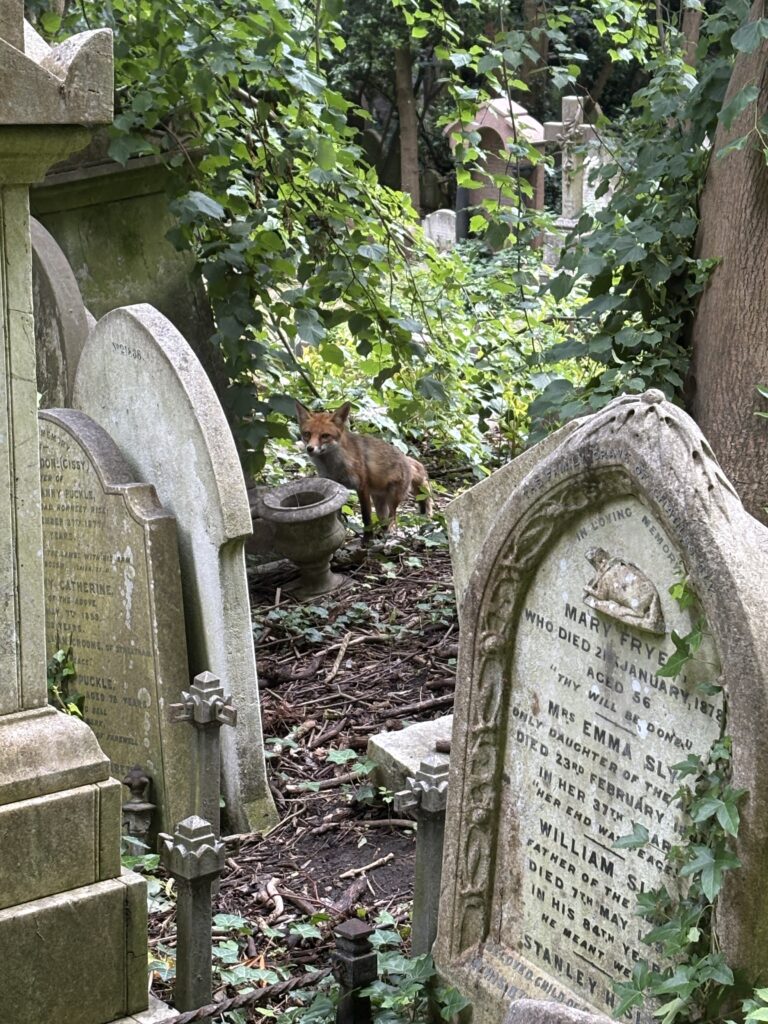
PS: Spotted: a fox from the cemetery’s resident fox family!