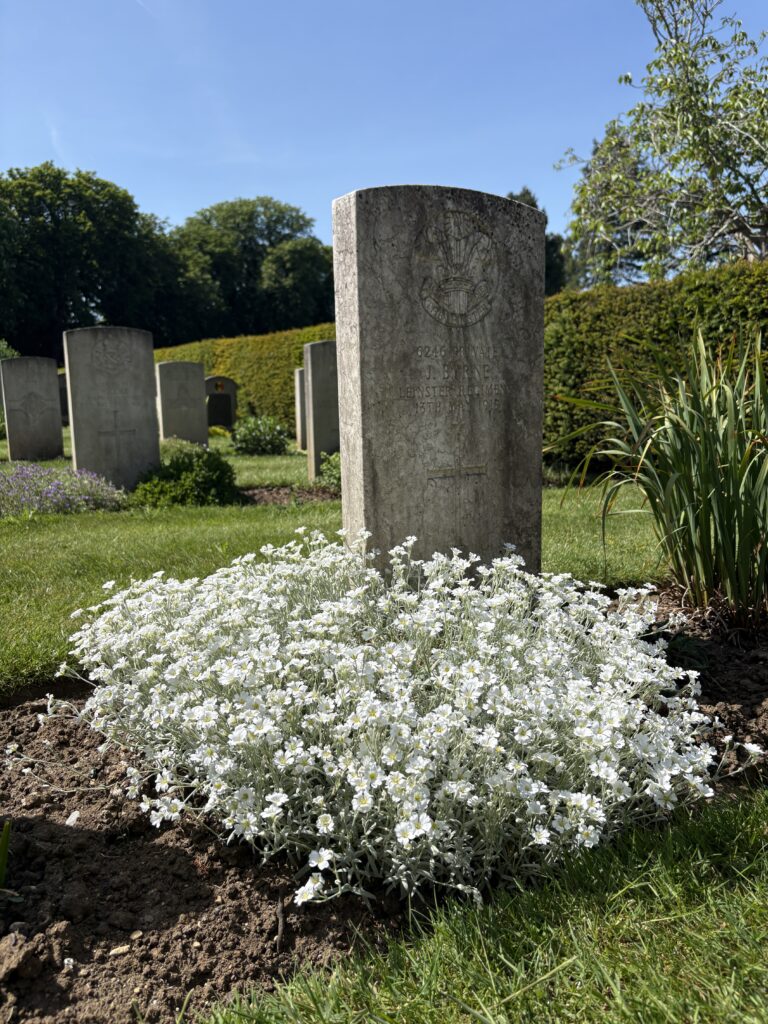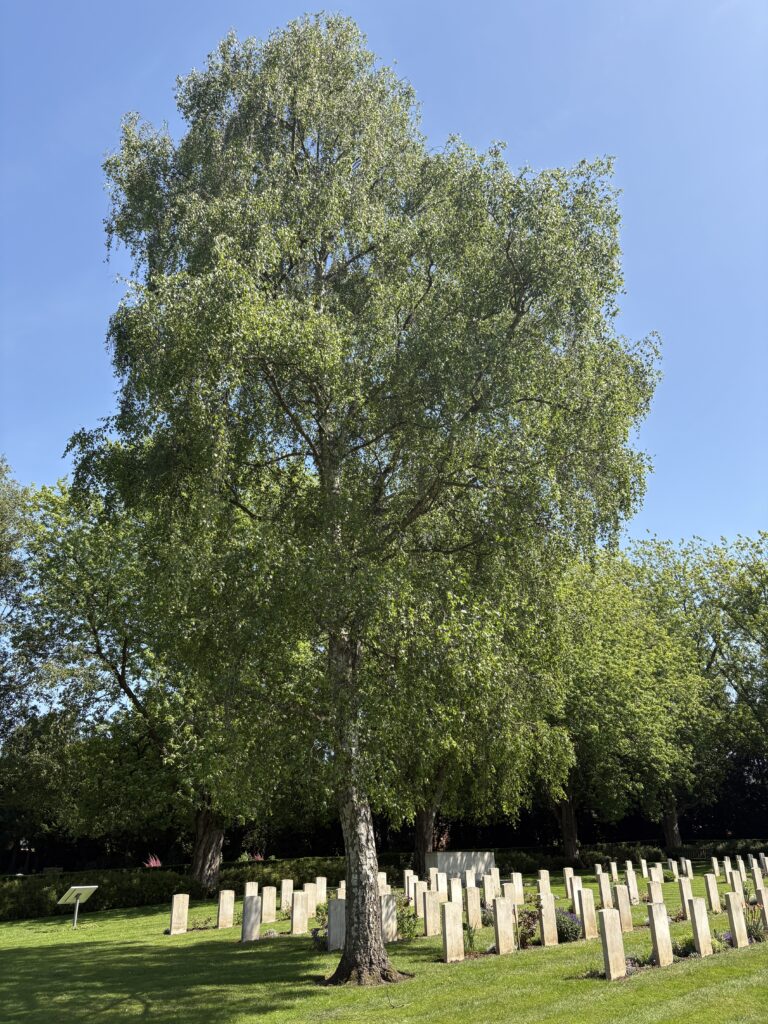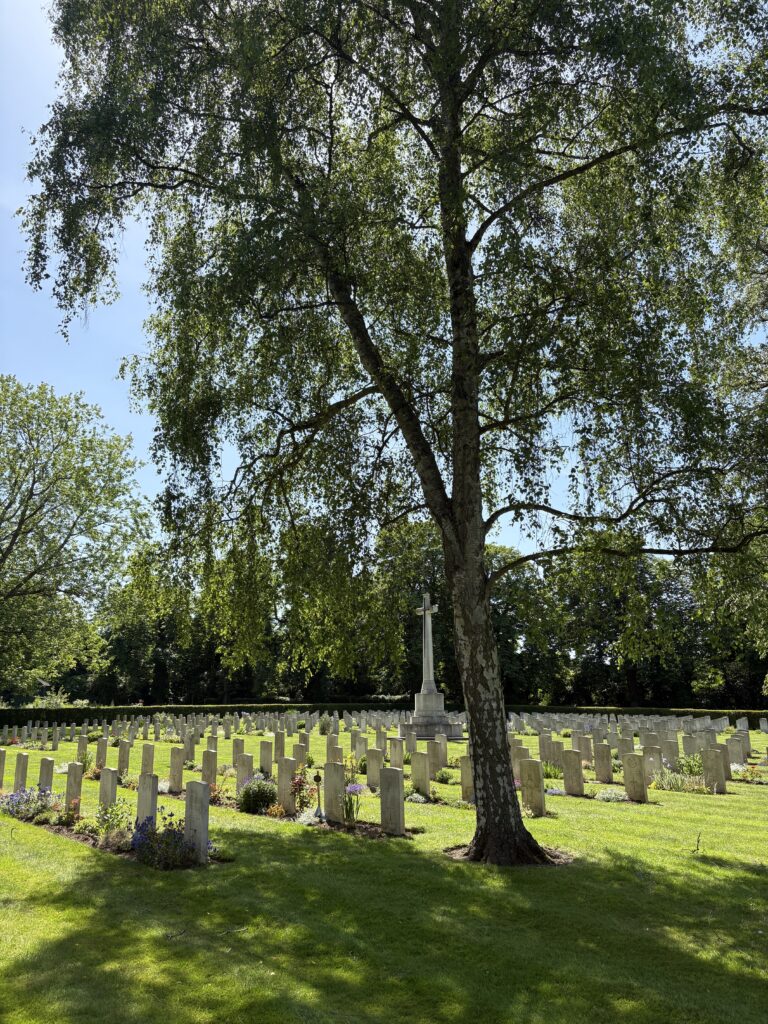
It’s War Graves Week – the Commonwealth War Graves Commission’s annual public engagement week. In their own words: “War Graves Week invites you to discover the stories behind the world wars at CWGC sites across the globe. Taking place each May, it’s our largest week of activity worldwide, and this year’s theme shines a spotlight on the people we commemorate and the teams who care for them, inspired by our global storytelling platform, For Evermore. With events, guided tours, site visits, and the chance to share your own family story through For Evermore, there are plenty of ways to get involved and explore the history that connects us all.”
As our project’s largest dataset is CWGC epitaphs and the CWGC is our public engagement partner, it seemed like a great opportunity to see some of their existing public engagement in action, and to learn some best-practices from them. I’m based in Oxford so I chose to attend the (free) War Graves Week tour of Botley Cemetery. The tour was delivered by CWGC volunteer guide Dick Richards – who was full of interesting info and has personally researched more than fifty individual stories of people buried here.
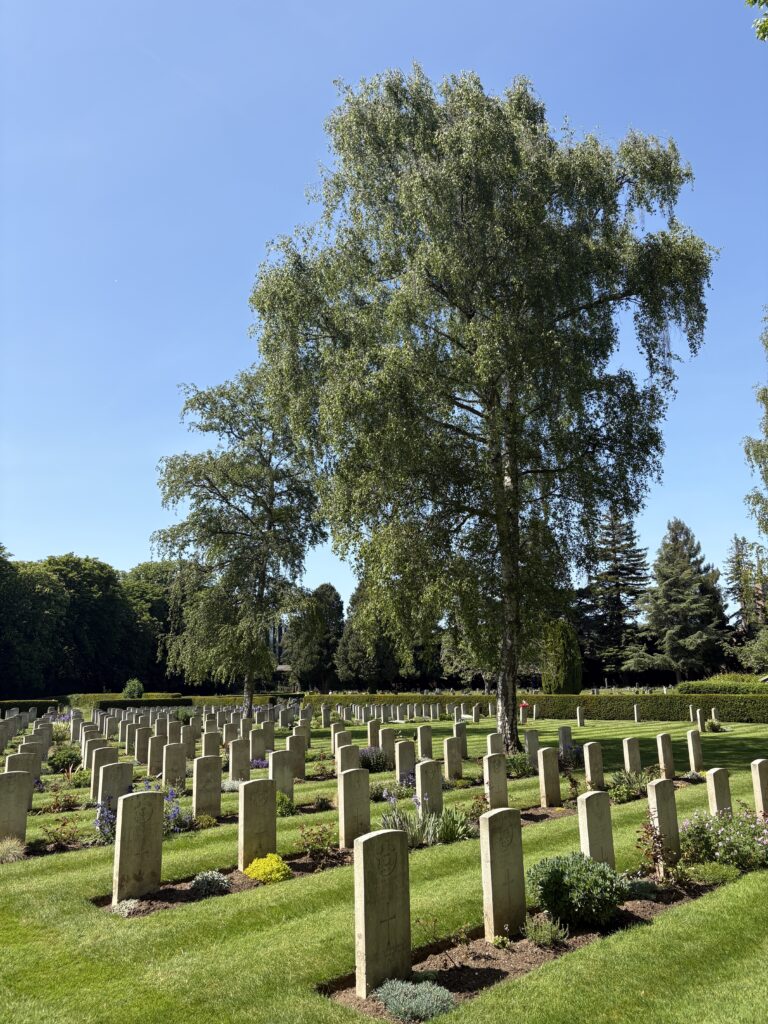
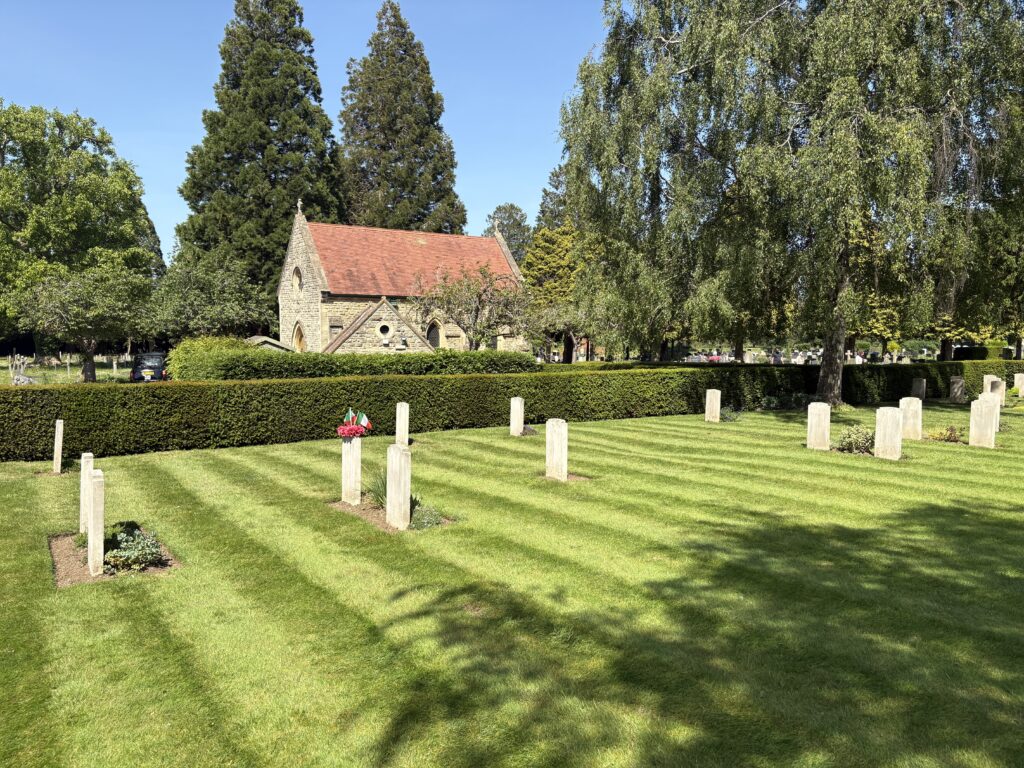
Botley Cemetery is a large (civilian) cemetery which opened in 1894. Most of its 739 identified casualties from the First and Second World Wars are buried in a designated CWGC plot (shown above), though others (particularly those who were locals) are buried in their own family plots elsewhere in the cemetery. There are 156 First World War casualties here; 516 Second World War casualties here (largely from the Royal Air Force, as this was the designated regional cemetery for the RAF); and ~70 non-CWGC (i.e. from other nationalities outside the former British Empire) burials from both world wars.
A quick guide to the basics of CWGC commemoration:
The CWGC cares for 23,000 war memorials and war cemeteries in 150+ countries, commemorating 1.7 million Commonwealth casualties from the First and Second World Wars. It is funded by member governments of Commonwealth countries, who share the cost of the Commission’s work proportionately to the number of their country’s graves in CWGC care. Where possible, they commemorate casualties individually, by name (we take this for granted now, but historically this was not the norm in many earlier wars), and have a policy of equality in commemoration: same size of headstone regardless of rank, etc. (Since 2021, the CWGC has begun to publicly confront its shortcomings in equal commemoration, particularly for people of colour – read more about their Non-Commemoration Programme to address this here).
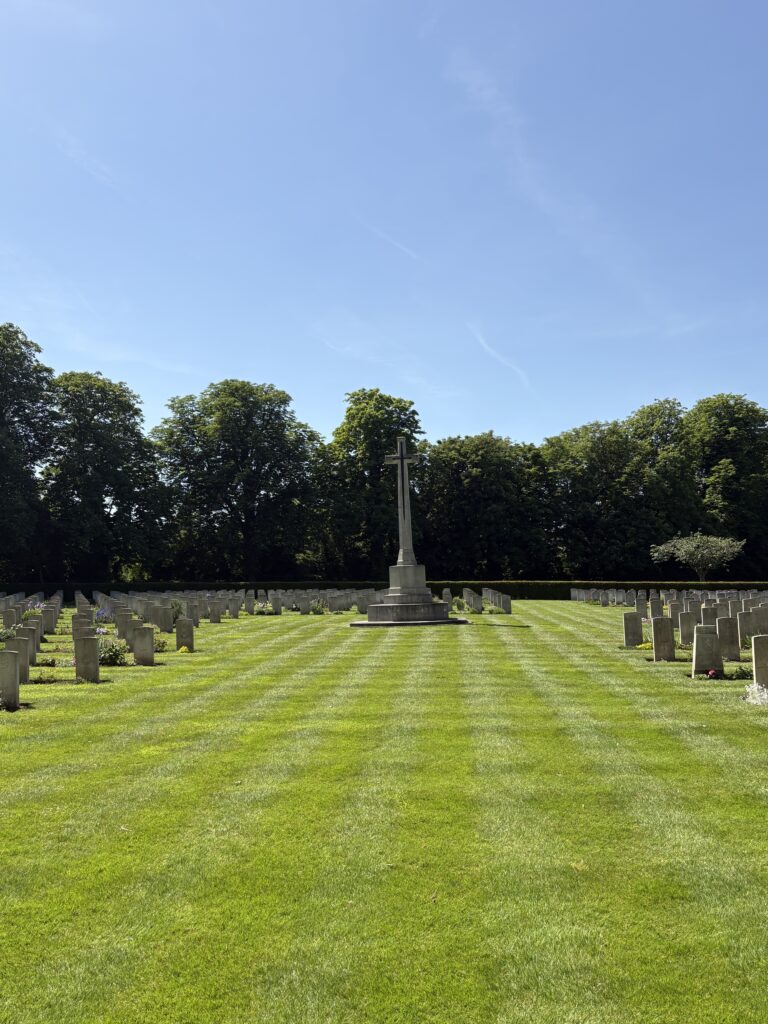
CWGC cemeteries have some distinctive features, including….
Cross of Sacrifice (as seen above): “Designed by Sir Reginald Blomfield, the stone cross with a downward sword reflects the faith of the majority of those commemorated in the cemetery. Initially known simply as the ‘Great Cross’, it later became known as the Cross of Sacrifice. The cross is usually found in sites with over 40 commemorations and it varies in size depending on the size of the cemetery. We use four different sizes, which range in height from 4.4 metres to just over 9 metres, depending on the size of the cemetery in which it is placed.”
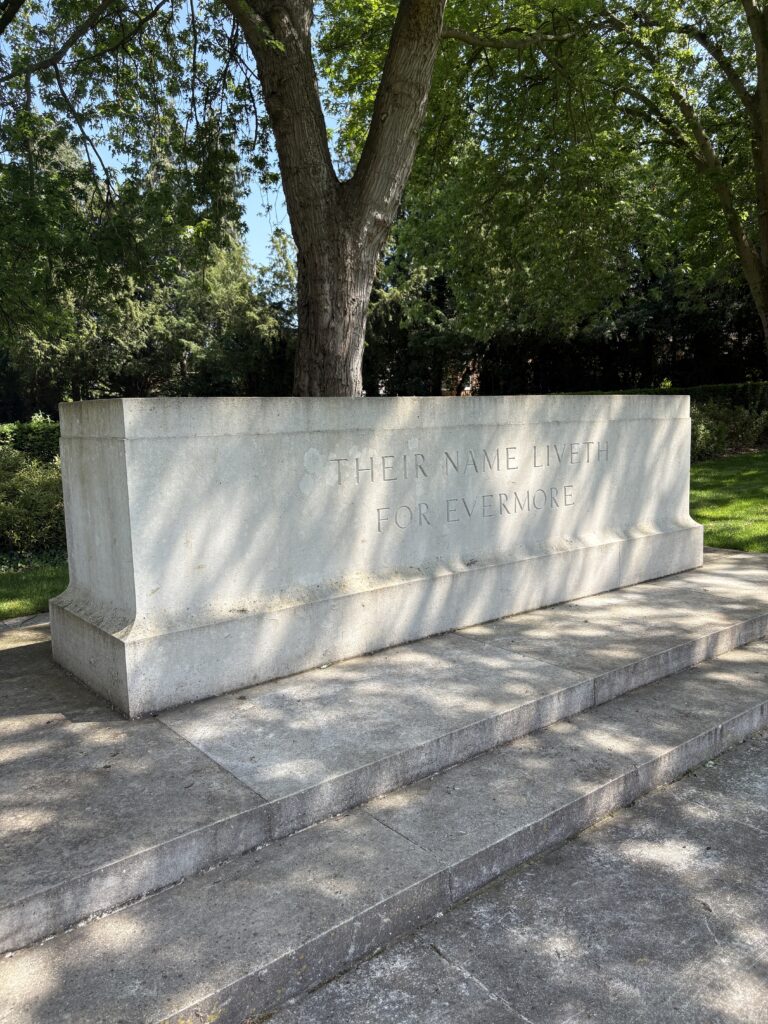
Stone of Remembrance: “Also known as the ‘War Stone’ or ‘Great Stone’, this feature is usually only found in larger cemeteries. Designed by Sir Edwin Lutyens, it is carved out of a single piece of stone and is inscribed with words chosen by Rudyard Kipling: ‘Their Name Liveth for Evermore’. Each stone is the same size regardless of the size of the cemetery it is placed in… Designed to mimic an altar, the stone evokes a religious sentiment to appeal to multiple faiths and symbolises the sacrifice made during both world wars.”
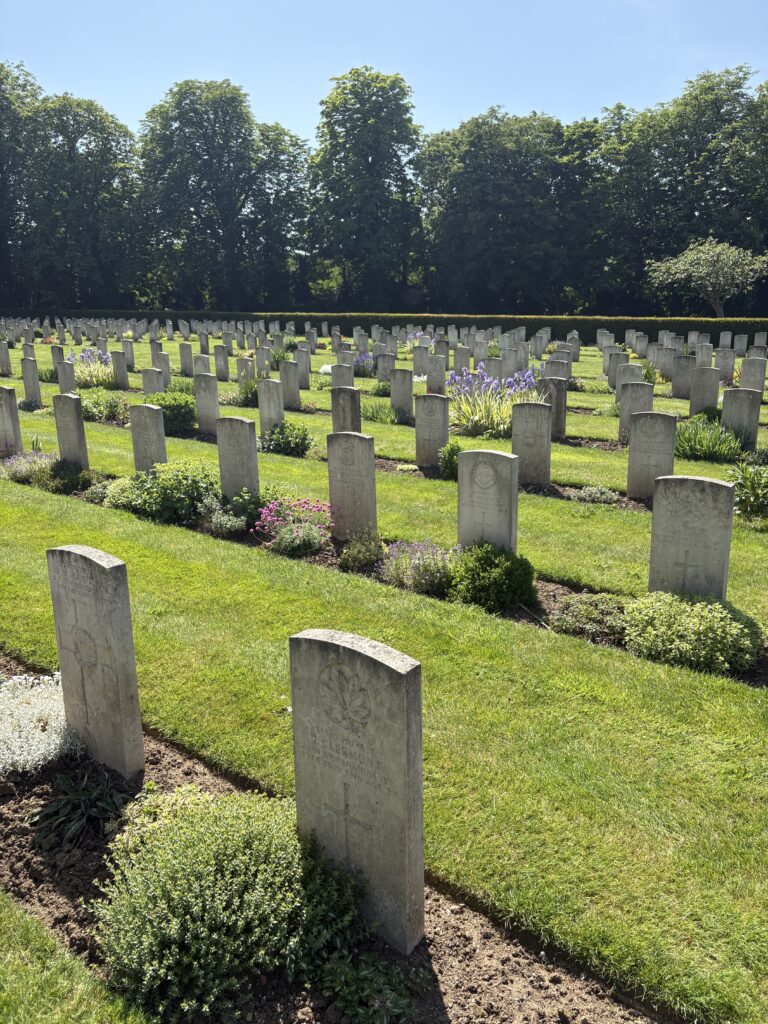
The tour highlighted a range of individual stories, including the longest- and shortest-serving servicemen buried in the cemetery; the highest-ranking casualty (noting that his headstone is identical to the others); 17-year-old Glenys Doreen Harris, serving with the Women’s Auxiliary Air Force, who died in a plane crash; and others highlighted below. We also learned about some of the ~70 non-CWGC burials here: including Italians, Belgians, Germans, and the only Greek soldier buried in the United Kingdom. Learn more about Oxfordshire’s Second World War POW camps housing hundreds of Italian and German men.
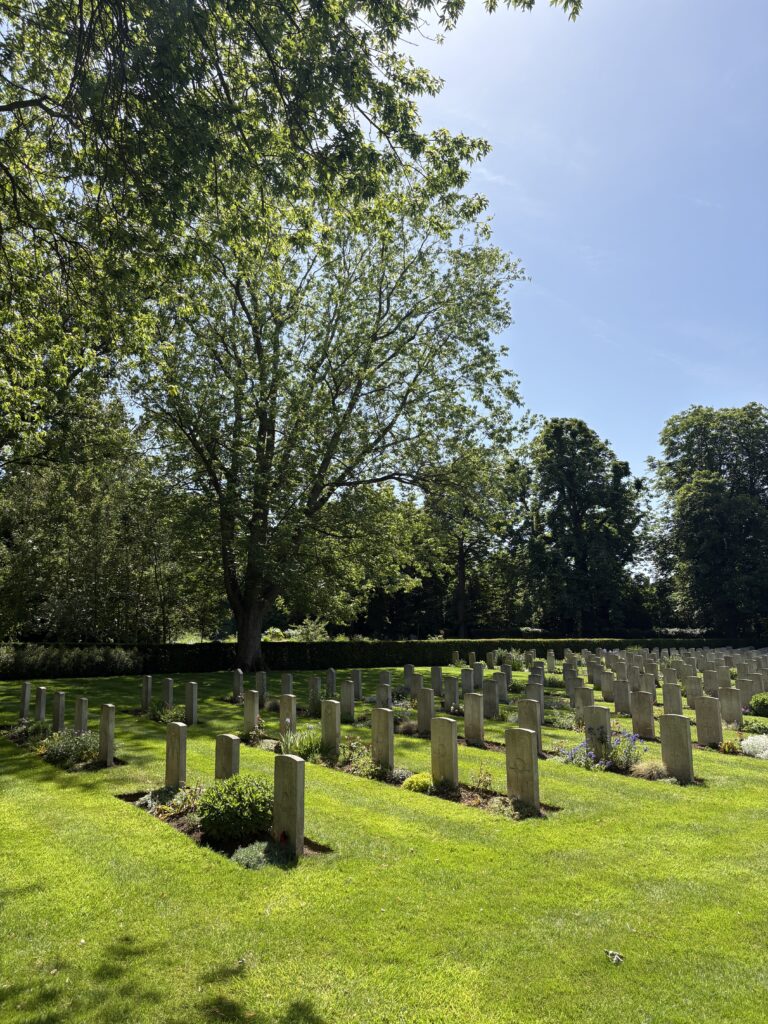
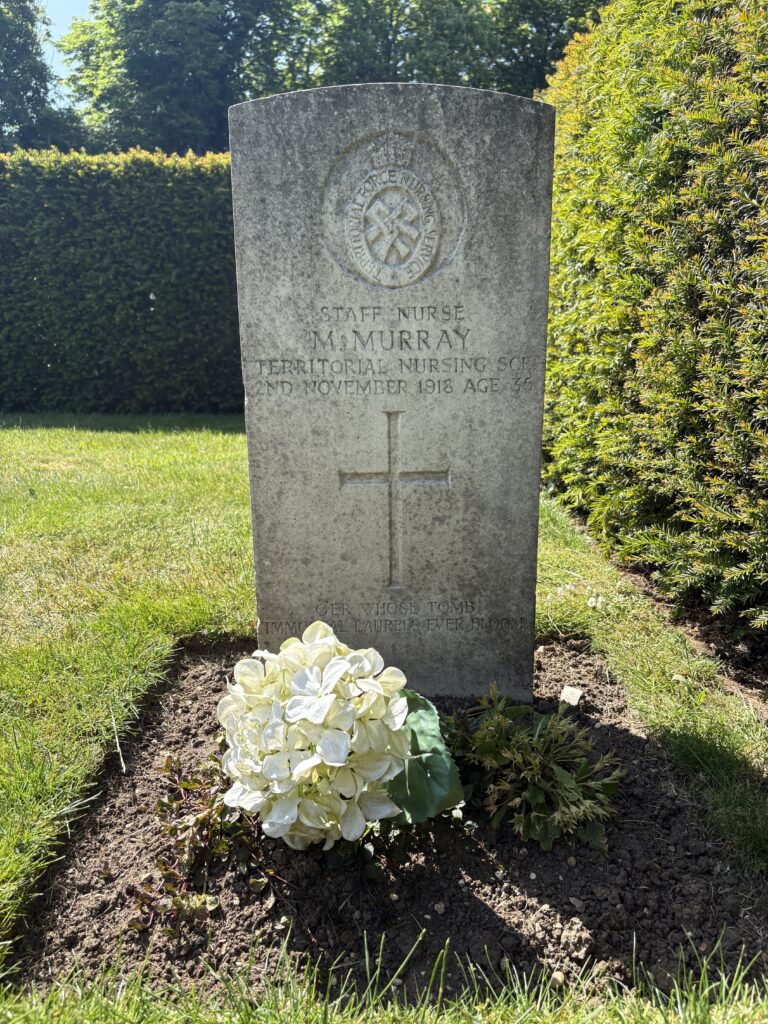
Isolated to one side – in a small subsection of the CWGC plot, demarcated by an old footpath laid down as part of the wider cemetery’s original 1890s design – is one of only two female headstones in the cemetery, nurse Mabel Murray, who died of the flu in November 1918. The guide told us that it’s likely she was intended to be the first burial in a dedicated subsection for nurses, but then no further nurse burials occurred here, leaving her grave appear strangely isolated.
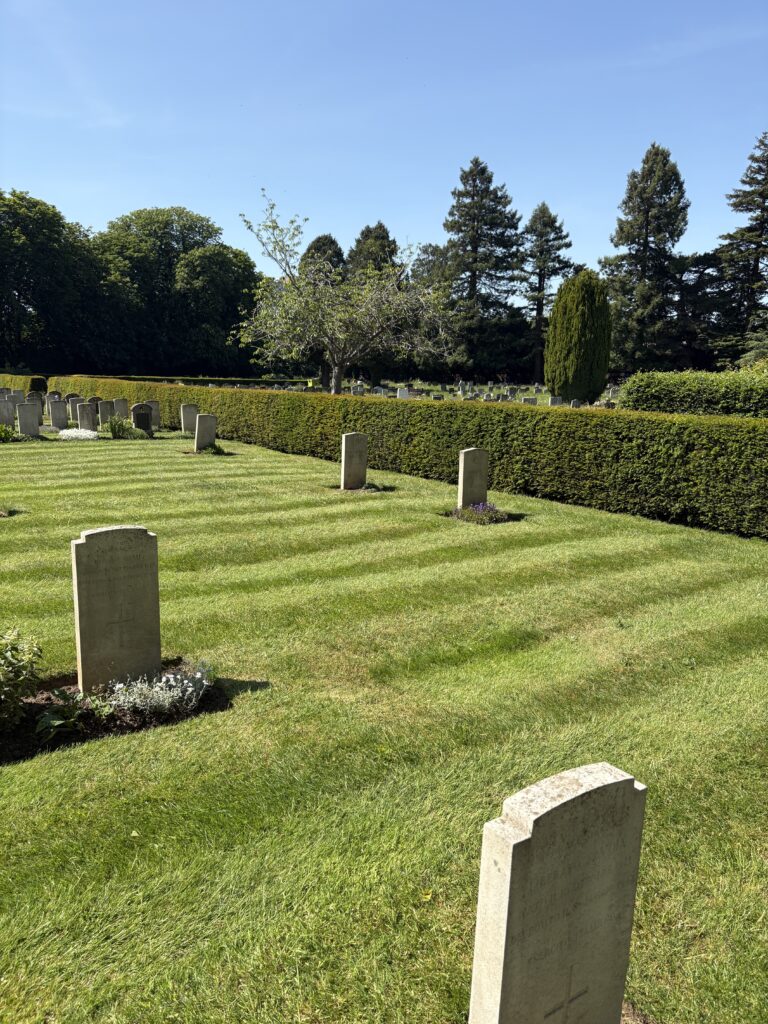
You can see in the two photos below that one area has CWGC graves spaced strangely far apart. The guide told us that this is because, according to burial records, there were 89 unmarked burials in 29 unmarked plots here – likely “pauper graves”, i.e. for the poor, and often stacked three deep. You can see particularly in the second photo that the stacking of burials in some spots has caused the ground to subside, leaving indents in the otherwise level surface of the cemetery grass.
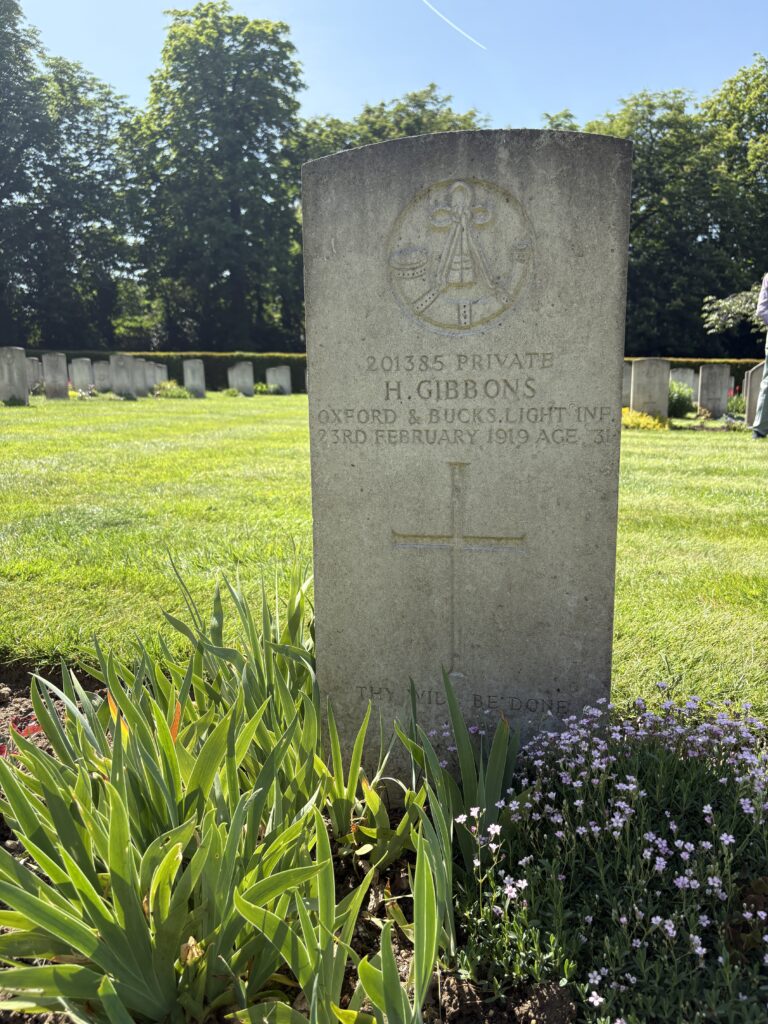
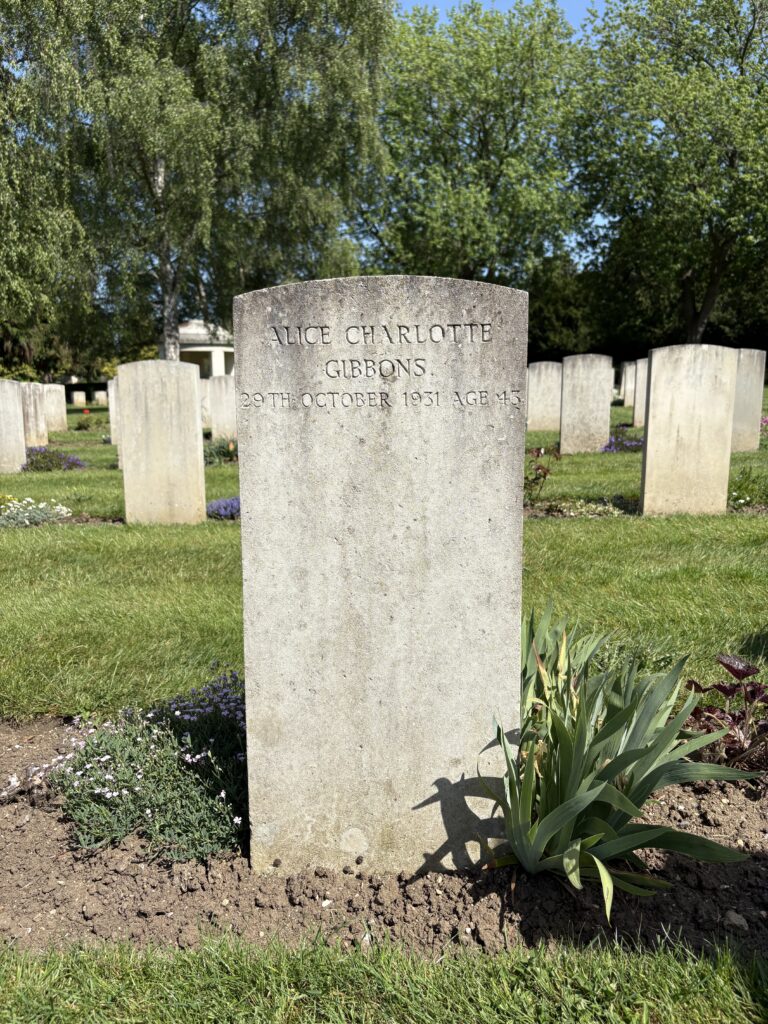
While there are only two female military burials here, at least 12 other women are buried here, in their husbands’ graves; usually this is not marked, but in Alice Gibbons’ case, her name was added to the back of her husband’s headstone, as you can see in the two photos below.
Massive thanks to guide Dick Richards for his informative and knowledgeable tour – and for persevering despite the 31C heat!